Fires don't wait. Neither should we.

Duration
10 weeks
My Role
Physical Lead + Packing Designer
Date
January - March 2025
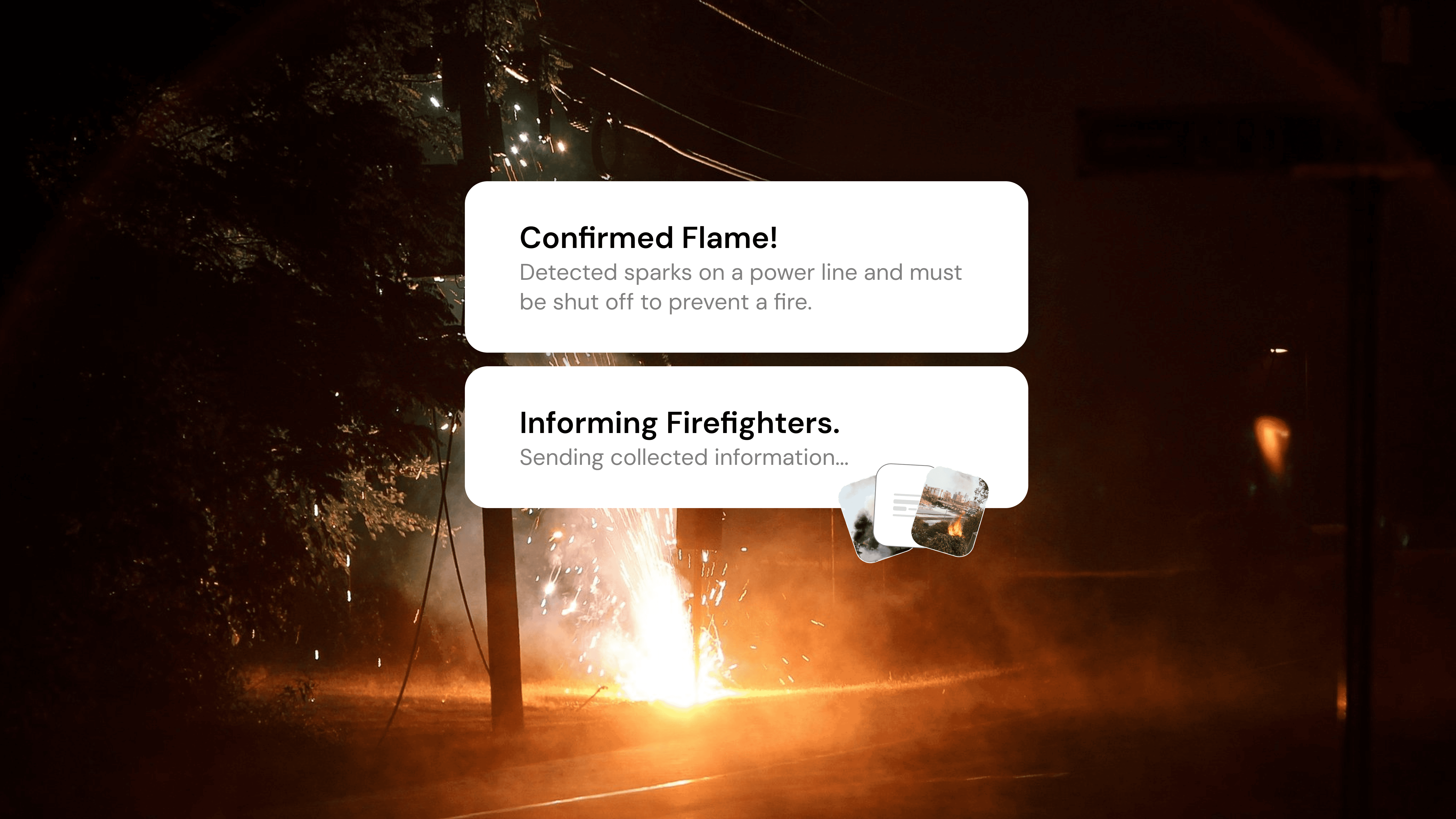
Torus detects fire before it spreads.
Torus is an advanced wildfire detection system installed directly on power lines, using AI-powered heat and gas monitoring to identify fires the moment they ignite.
It sends instant alerts to emergency responders and residents, while also notifying utility companies of downed or sparking lines to prevent potential disasters.
By providing real-time data and reducing detection delays, Torus helps contain fires faster, protecting communities and critical infrastructure.
My Role
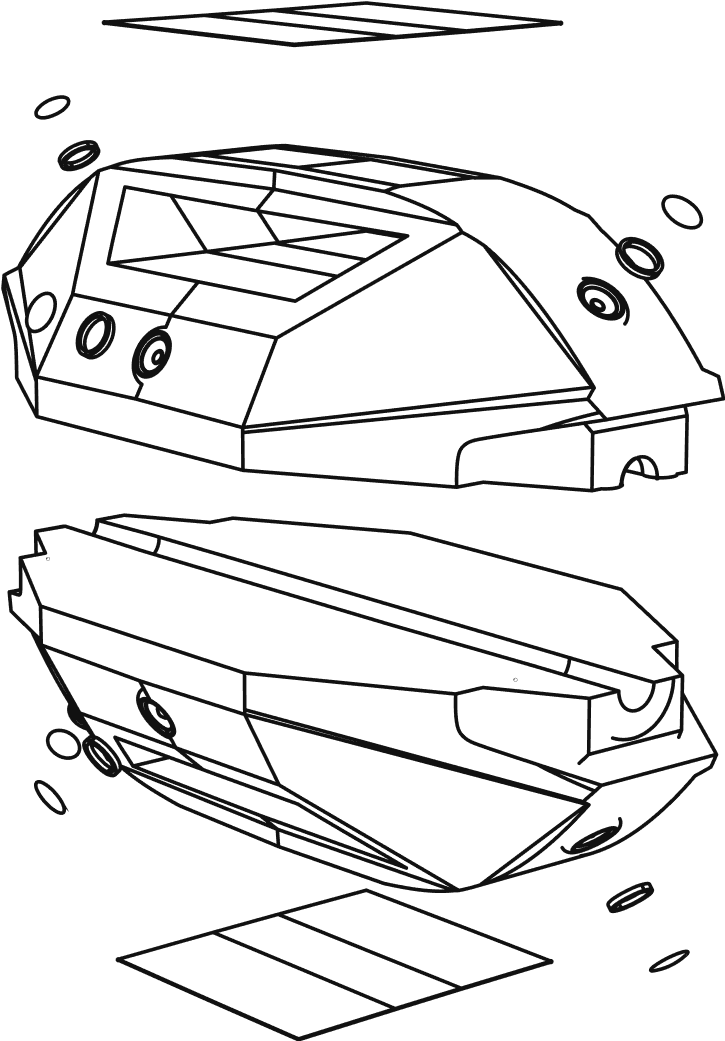
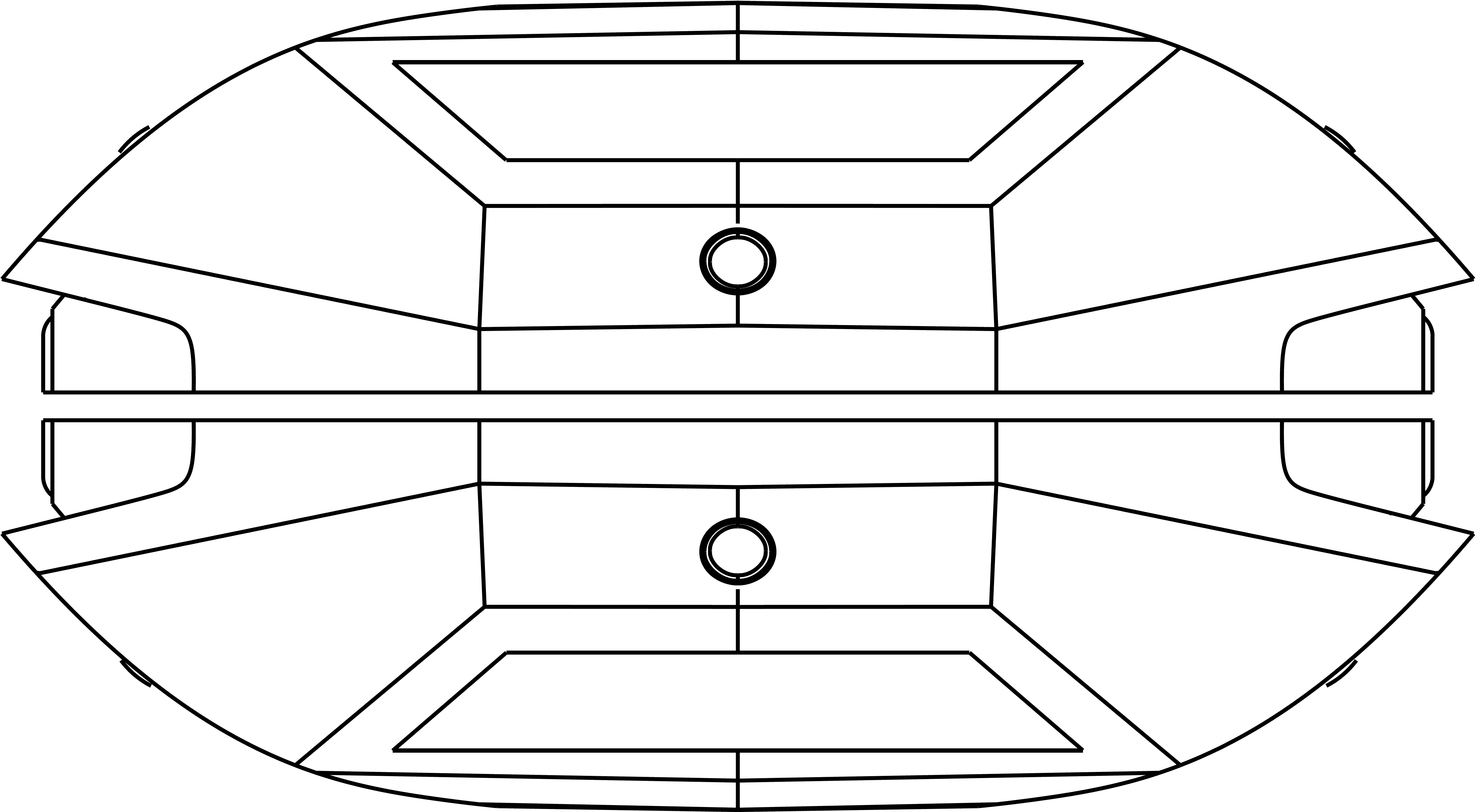
As Physical lead, I played a key role in defining the physical appearance of the Torus nodes, as well as the packaging and accompanying brochure, through several rounds of iteration. I was responsible for assembling the physical Torus box.
Though not a UI or Visual lead, throughout the development process I helped to refine screens and design select portions of user flows. I was a part of designing and delivering all team presentations, and I also contributed to research and the initial concept development.
Overview
Torus helps detect and contain fires faster, protecting communities and critical infrastructure.
Detecting a fire's first sparks on the pixel level.
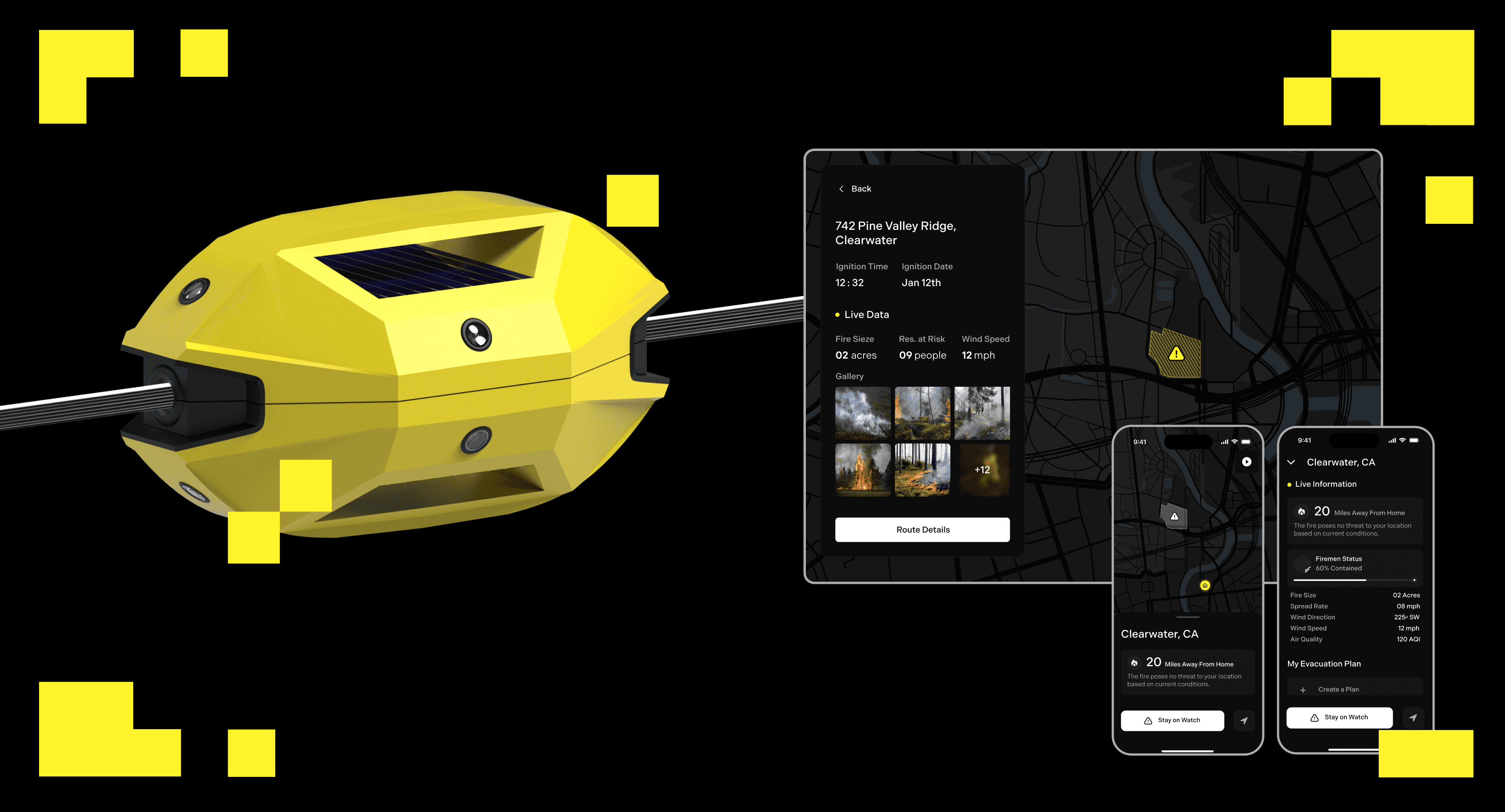
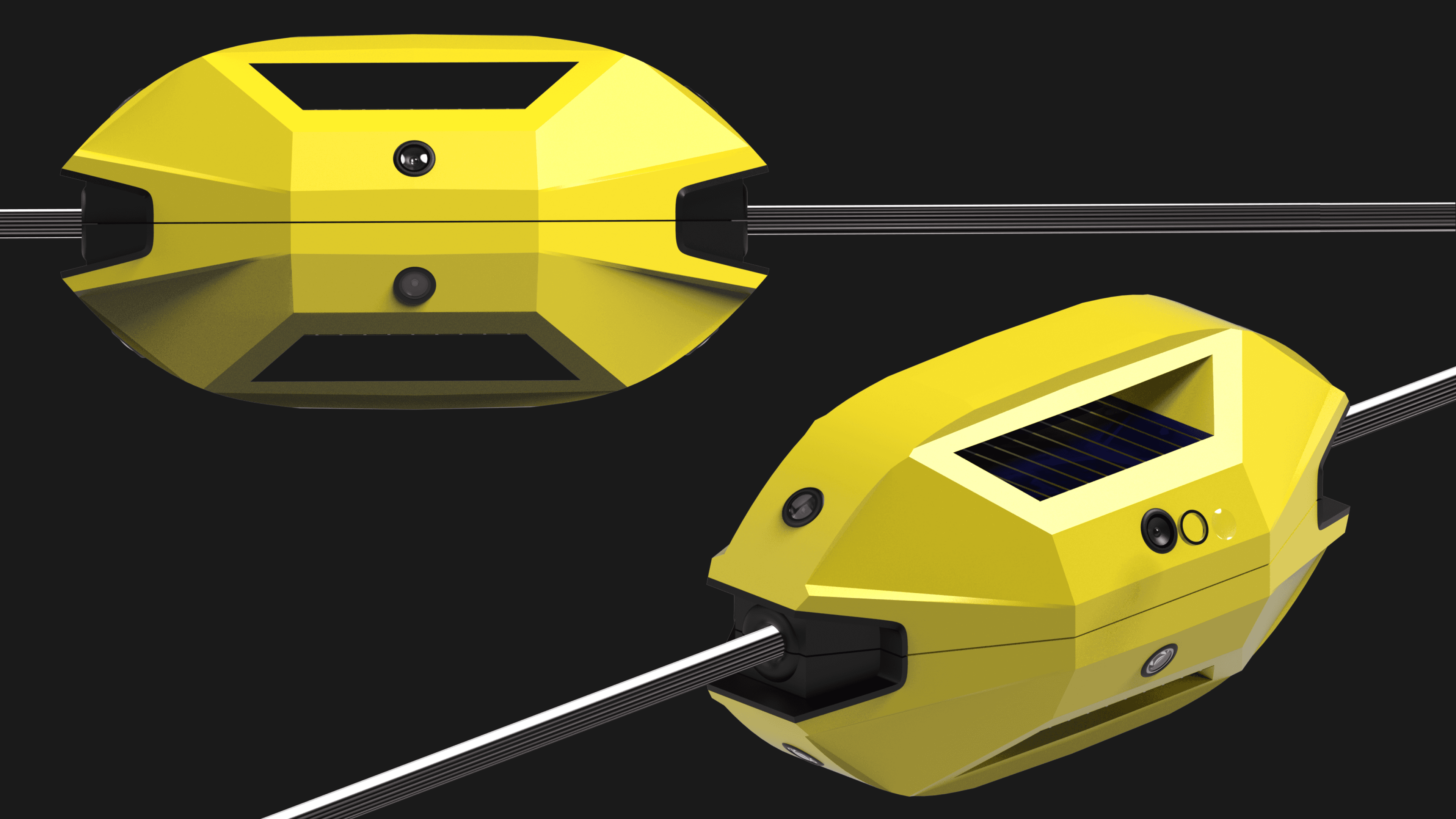
Torus nodes are installed every 1–2 miles along power lines, using P2M (Processing-in-Pixel-in-Memory) technology and thermal imaging to detect early wildfires on the ground or spark-related threats on the lines, then communicate across the network for a rapid, coordinated response.
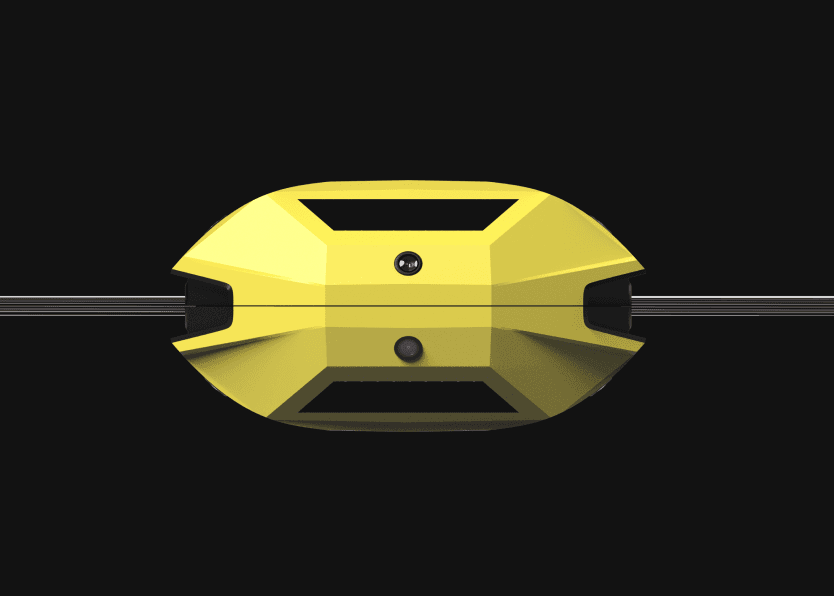
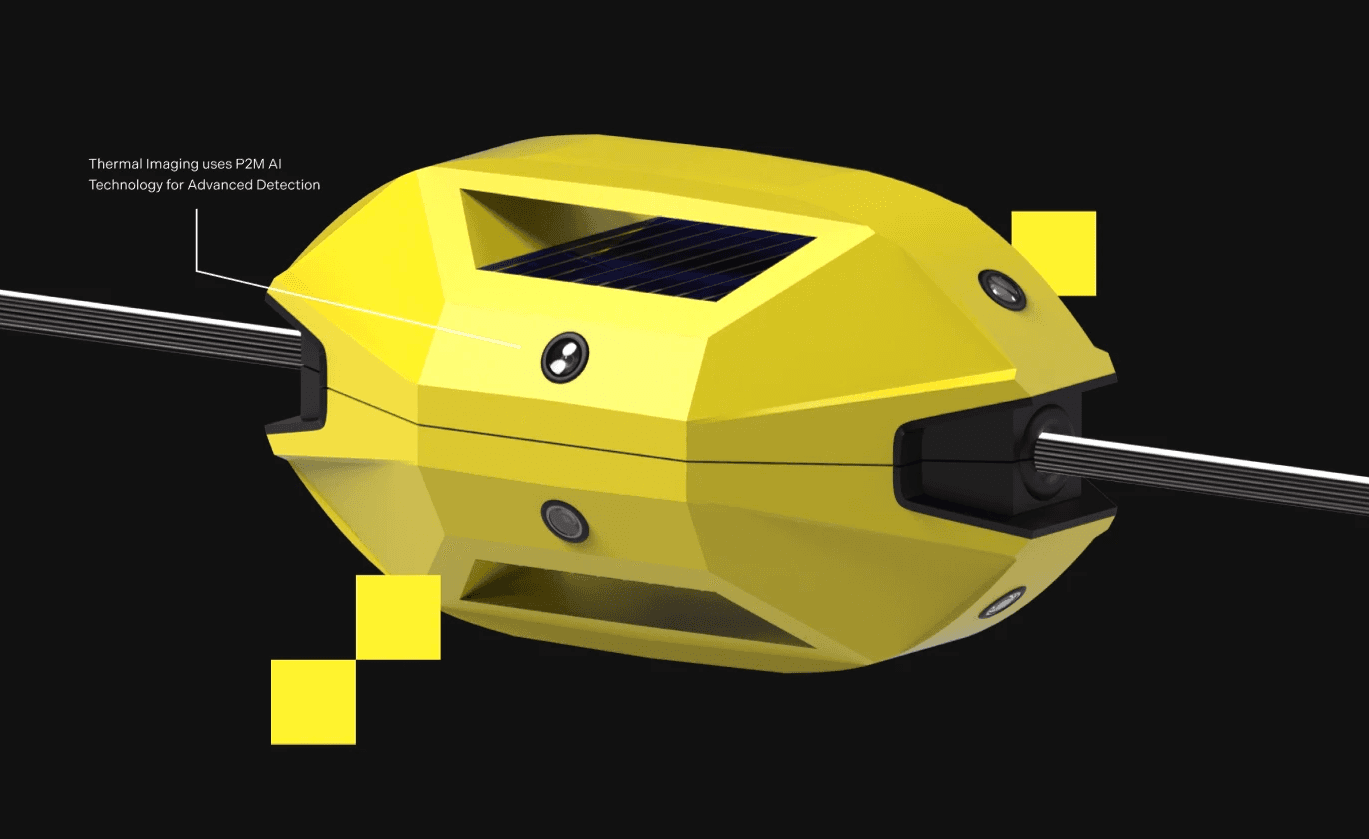
Torus facilitates a rapid, efficient response to wildfires by keeping all stakeholders informed.
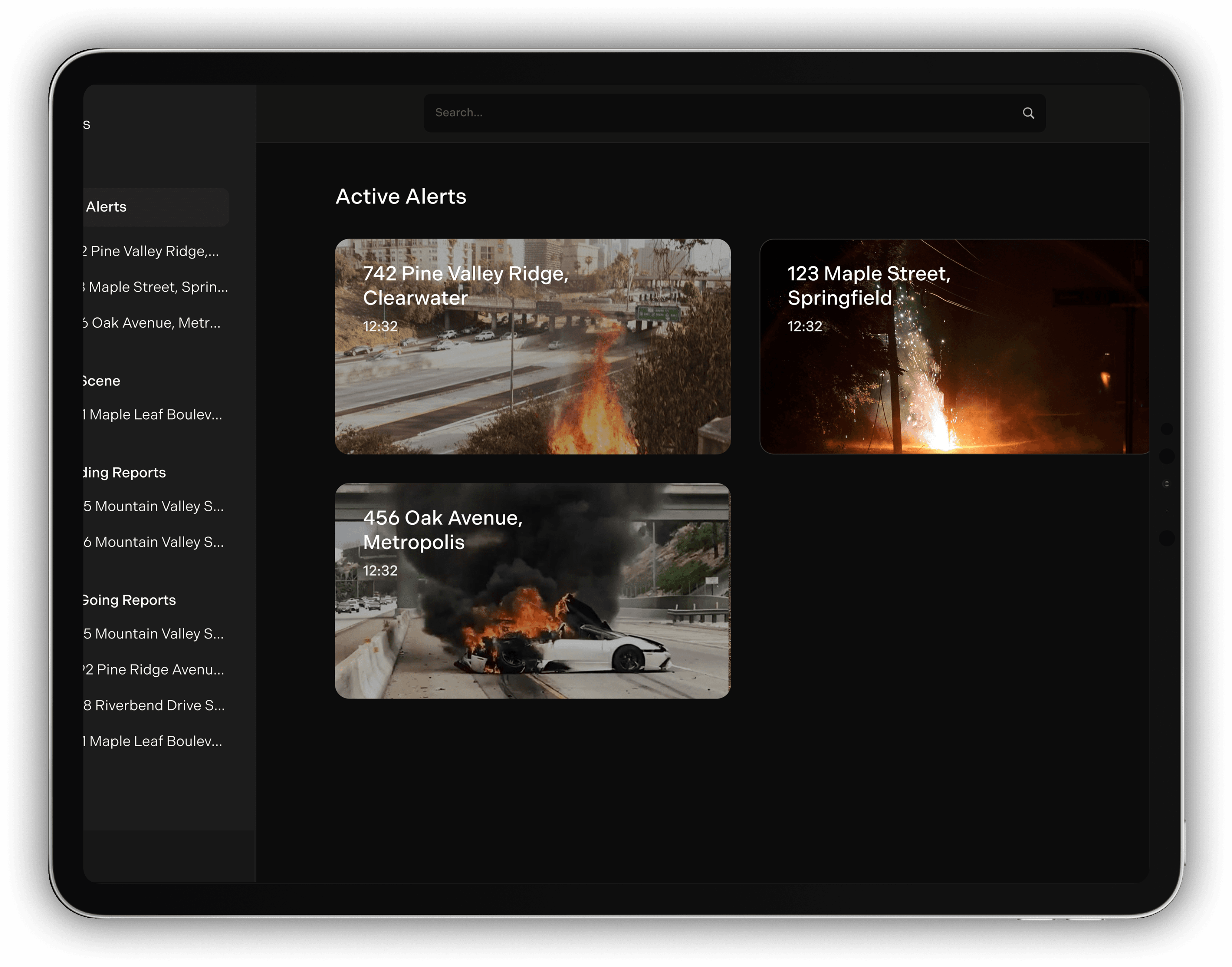
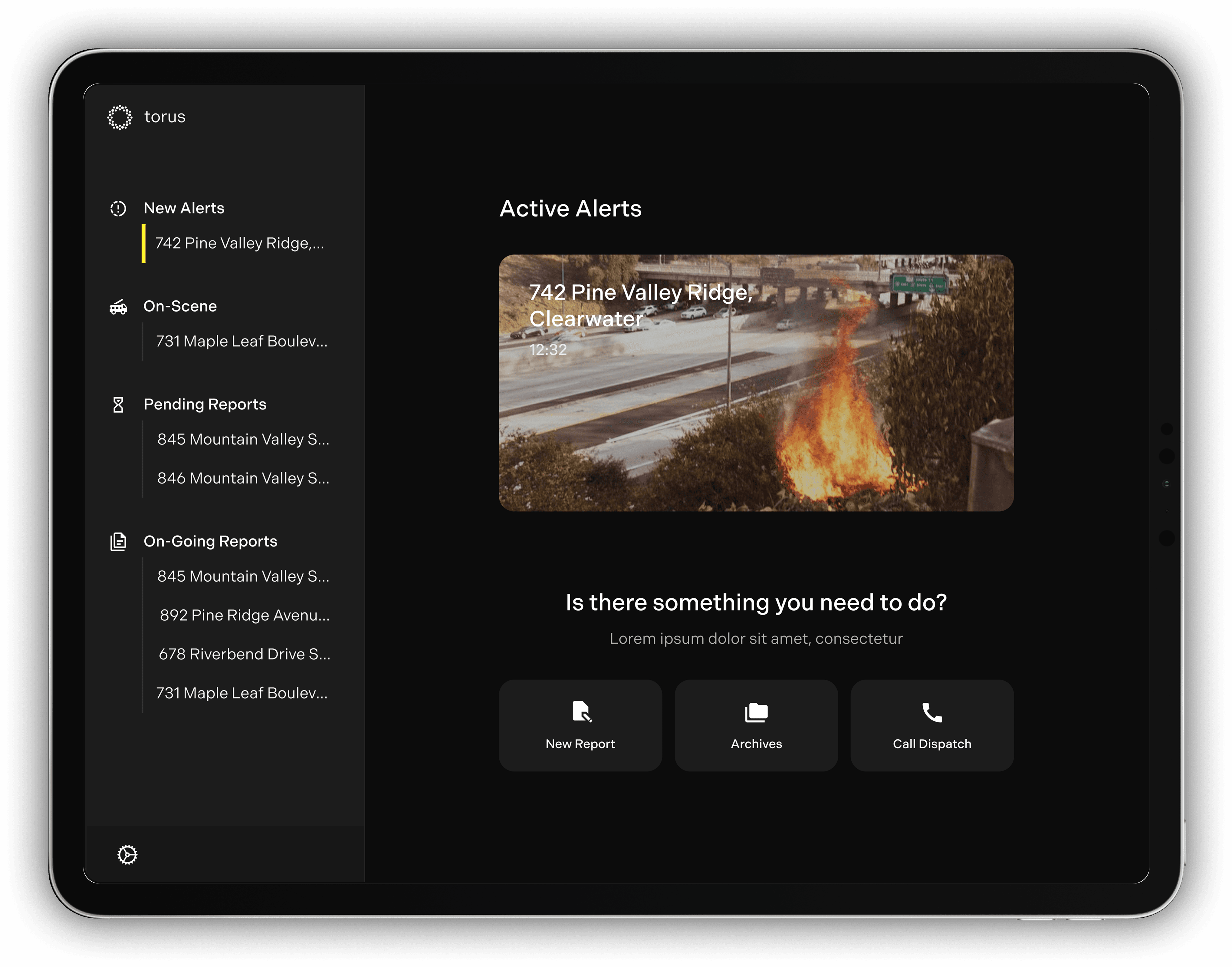
Supporting dispatch with in-depth, more immediate alerts, allowing them to notify firefighters even faster.
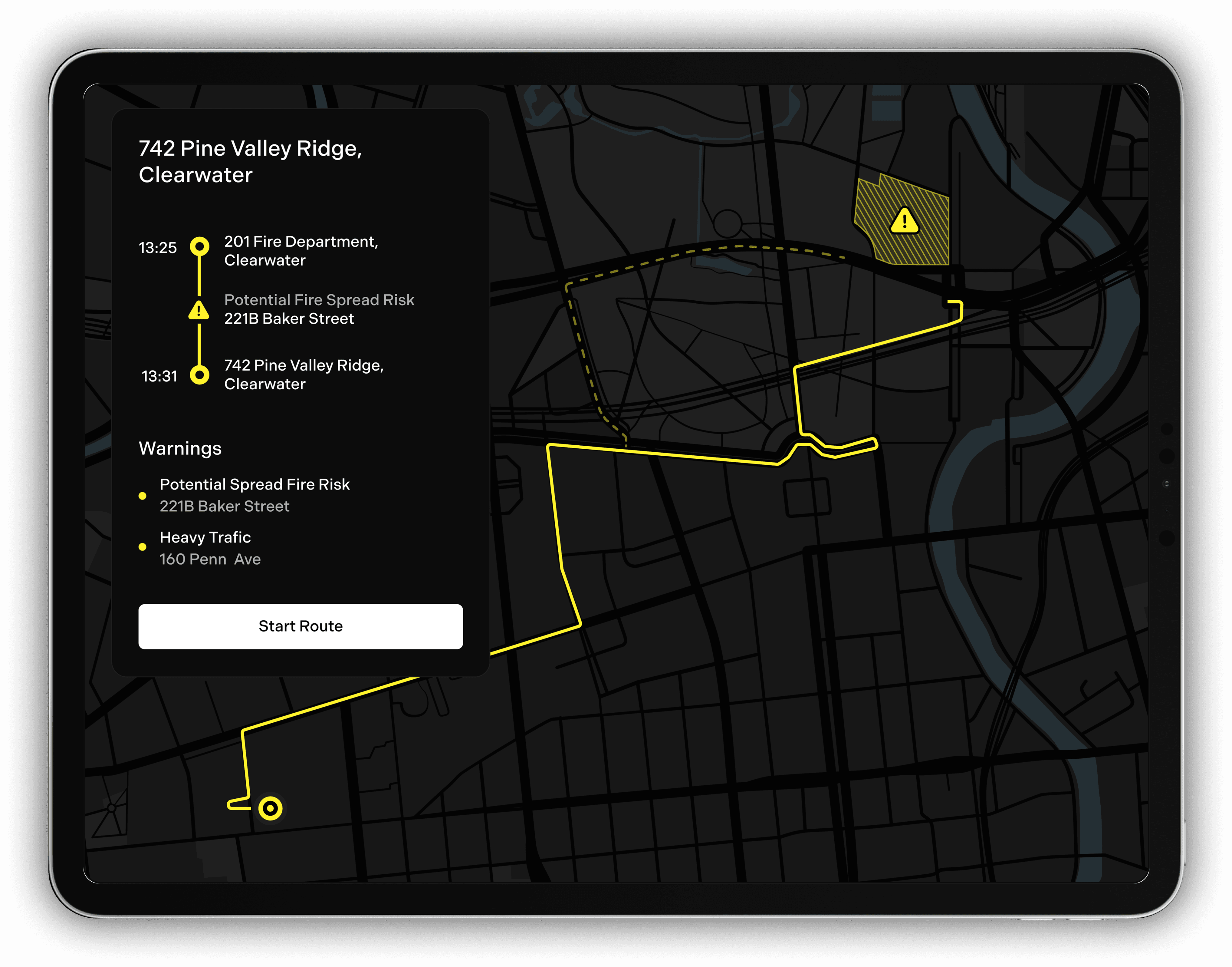
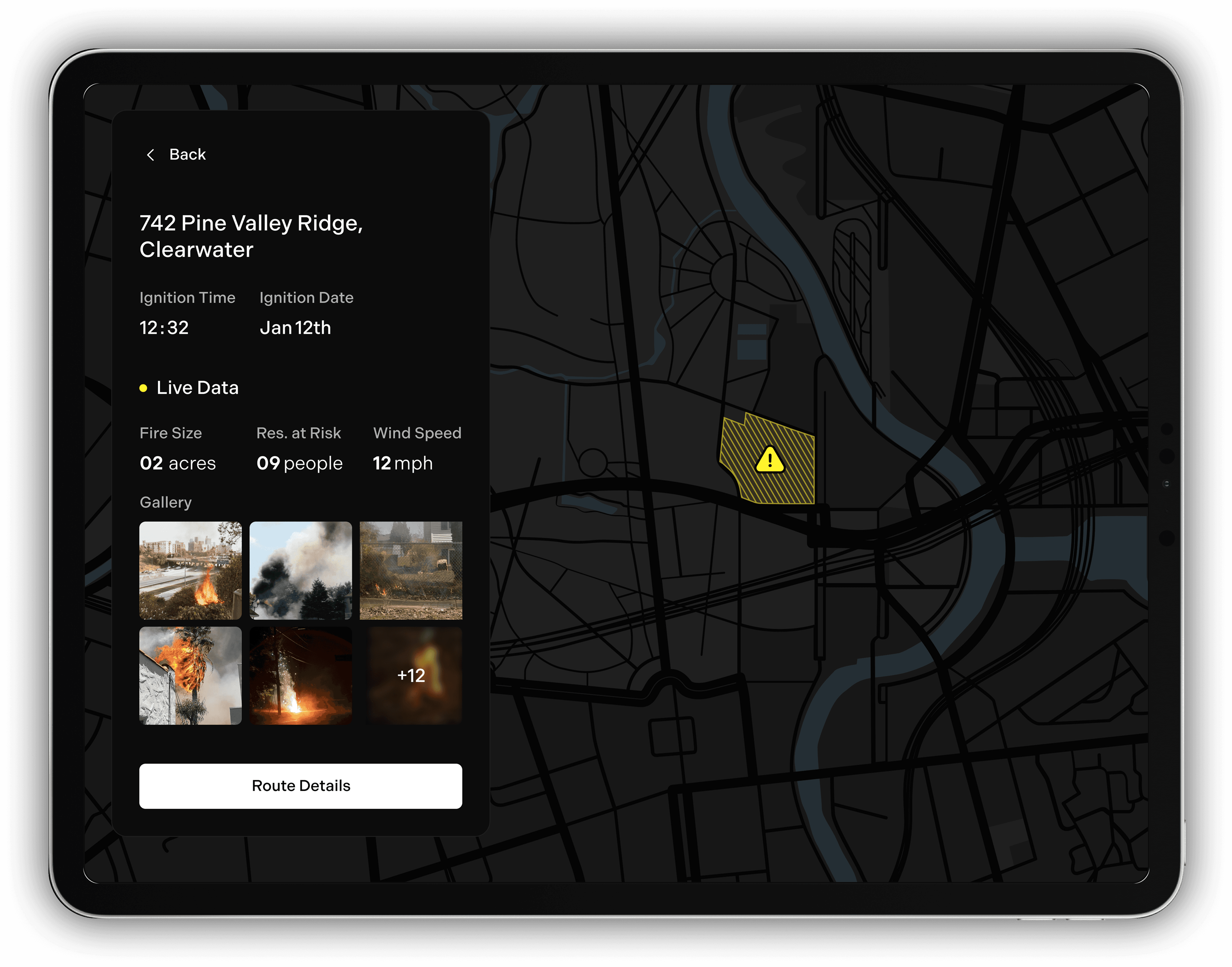
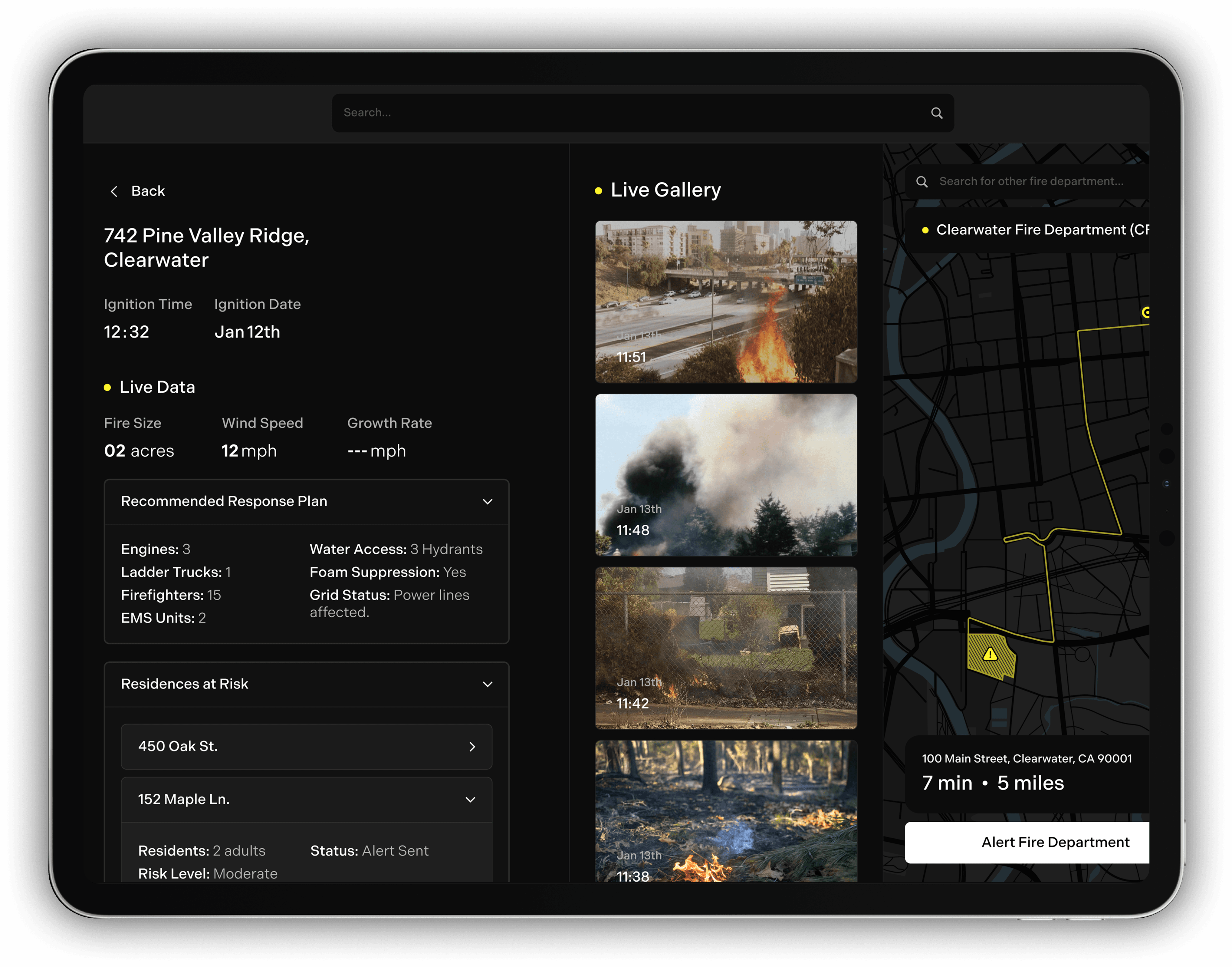
Delivering key information to firefighters including the location, size, and spread of a fire, as well as details about at-risk resident
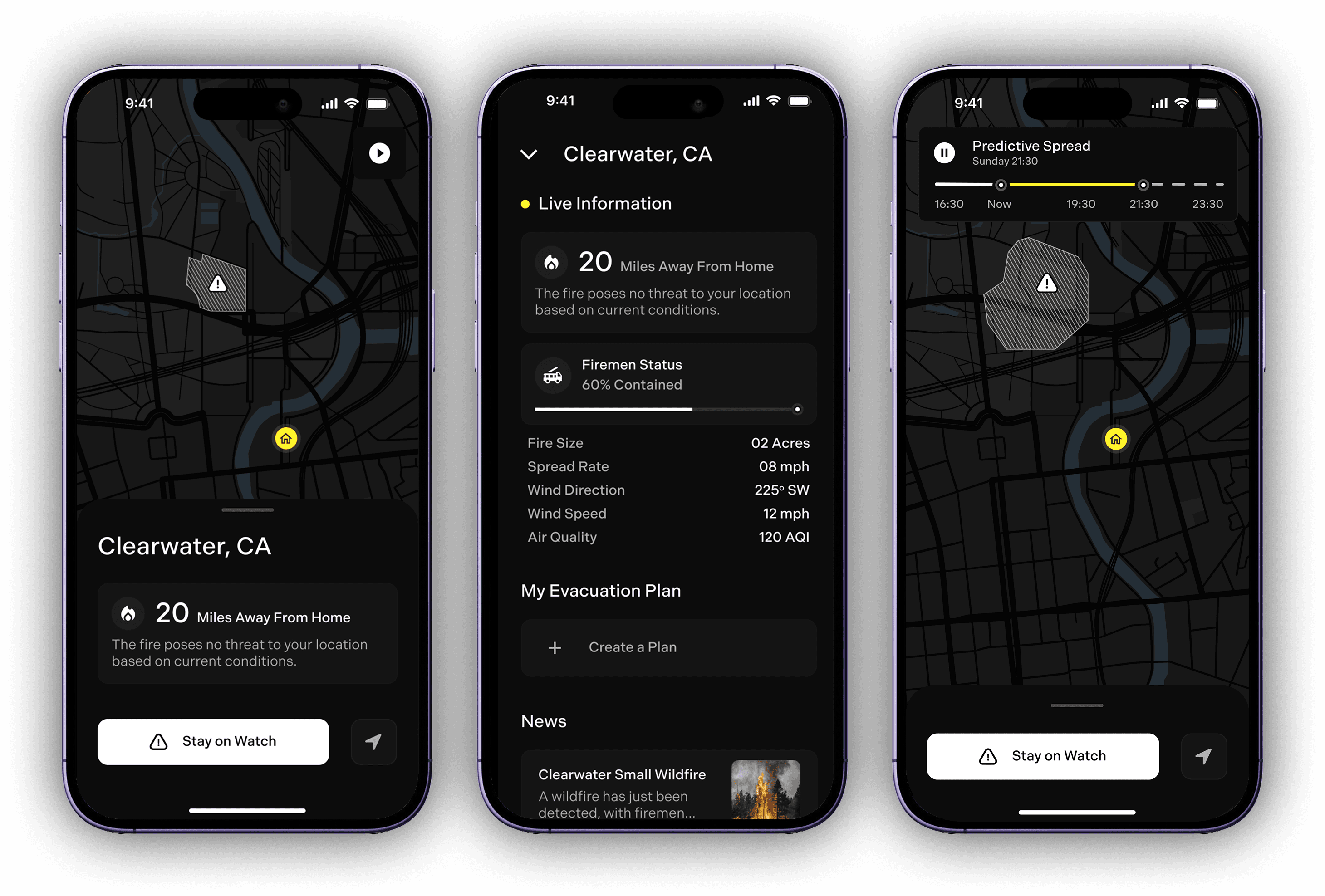
Residents near the fire are notified through the Torus app, informed about evacuation needs, and provided with emergency contacts and safe travel routes, minimizing panic and road congestion.
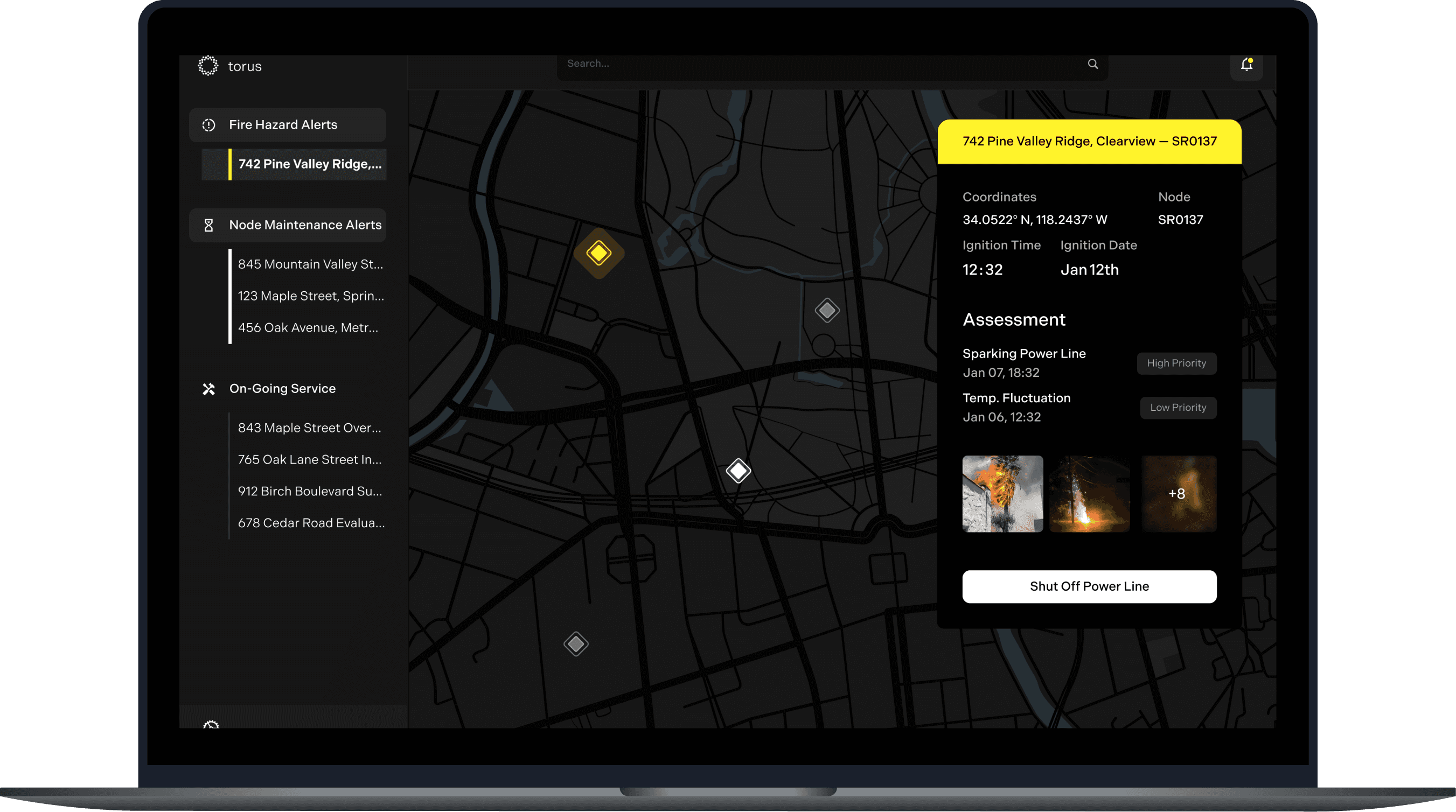
Utility companies monitor the network of nodes, able to immediately shut off a power line remotely if a Torus node detects it is causing a fire.
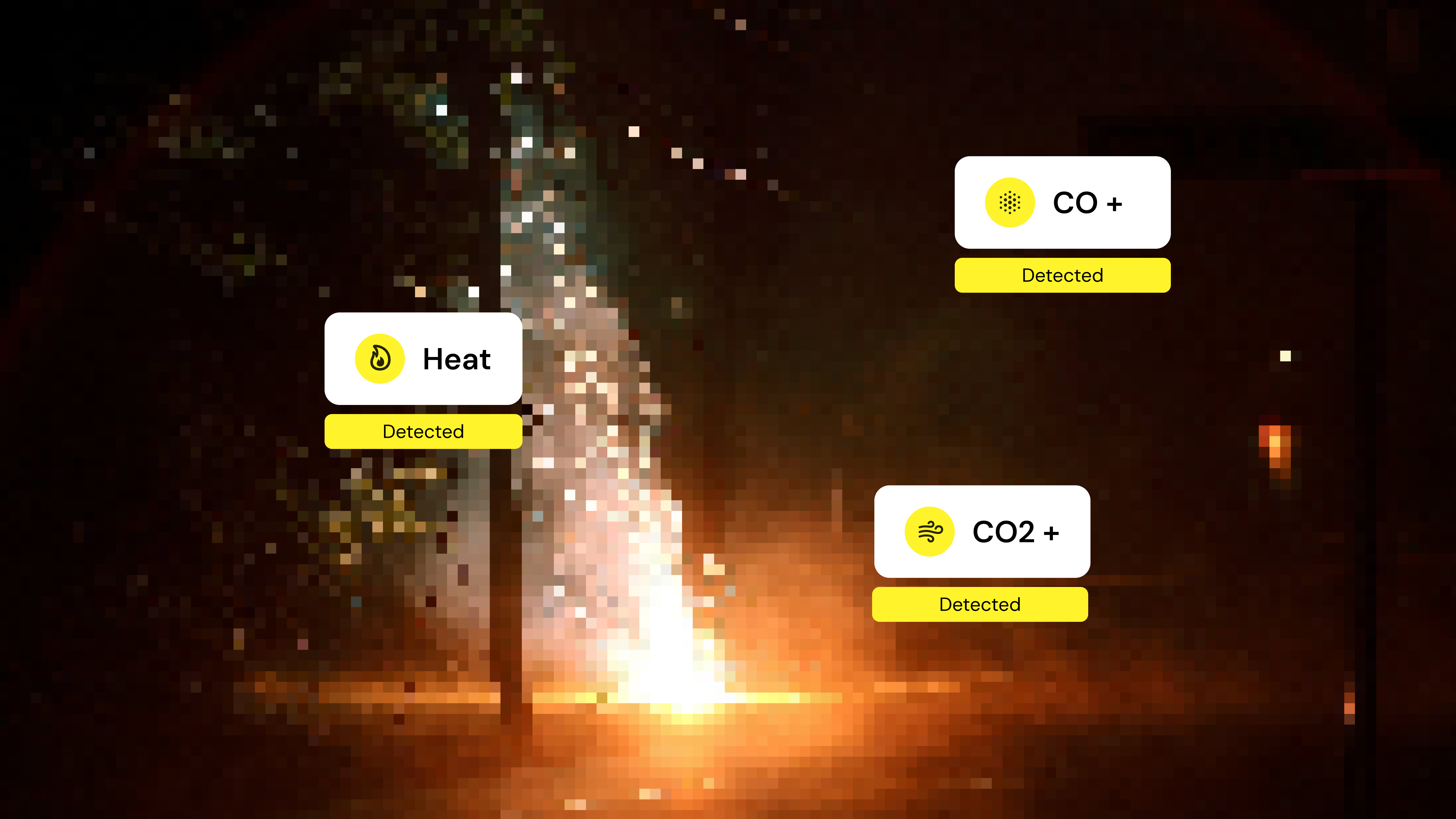
Torus's infrared cameras and P2M AI allow for Torus nodes to constantly monitor their surroundings and instantly recognize the first signs of fire.
Problem Space
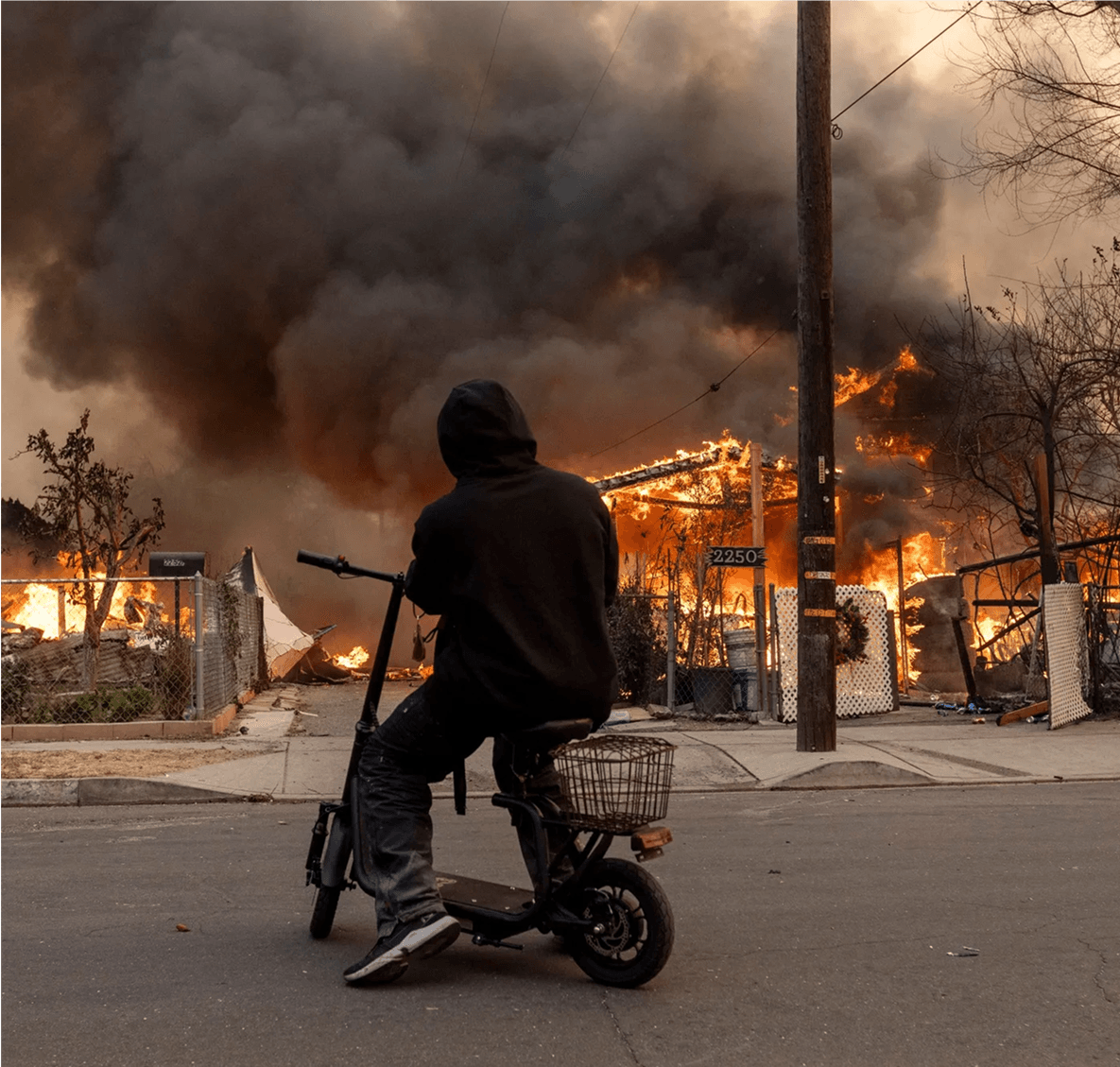
Stopping fires before they spread is the key to protecting communities.
Current firefighting response efforts focus on better technology once the fire is already active. Our team aimed to create a solution that could stop fires before they even began.
Current wildfire prevention strategies
are ineffective and unreliable.
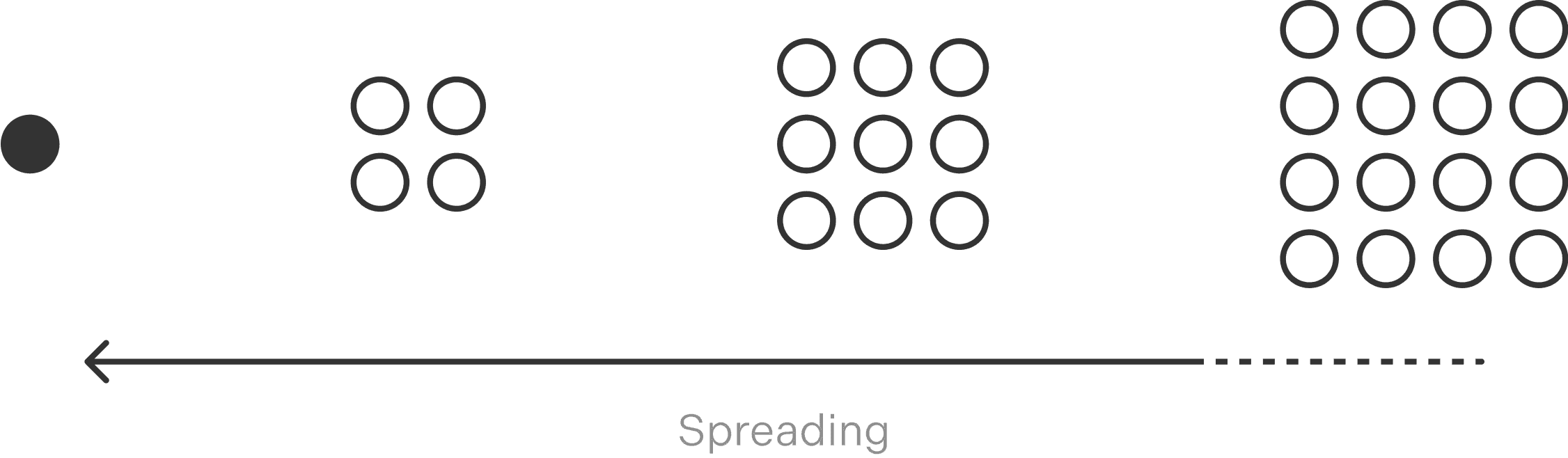
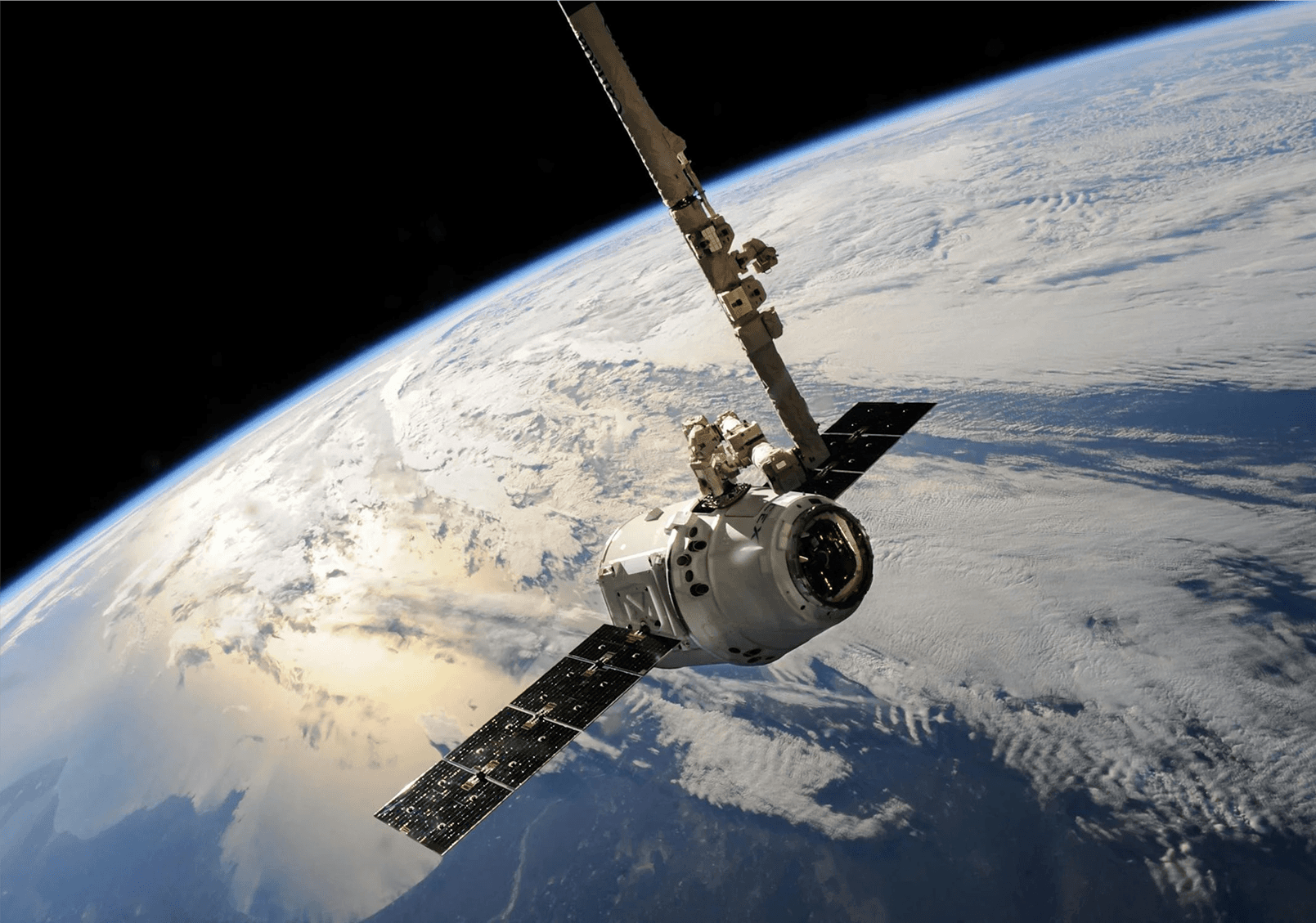
Satellites can take anywhere from 20 minutes up to several hours to detect fires, and human reports often lag further, letting blazes spread rapidly, destroy environments, and escalate response costs.
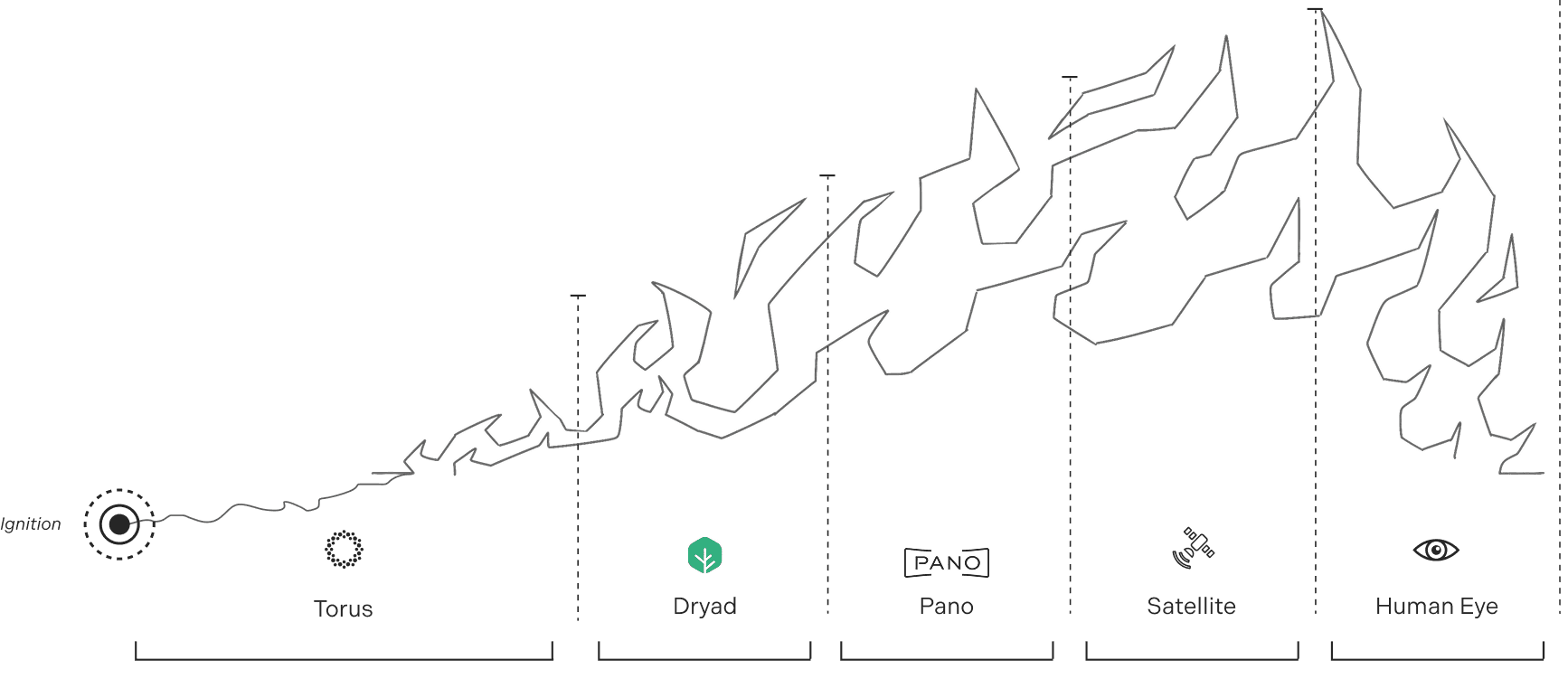
Torus outpaces other AI-powered wildfire prevention competitors.
Dryad uses solar-powered gas sensors placed in forests to catch fires in the early smoldering phase, often within minutes. Pano AI, on the other hand, uses high-up cameras to spot visible smoke; while effective at detecting smoke quickly, it only alerts once a fire is already spreading.
Early Development
The earliest possible wildfire detection system, powered by P2M AI.
Torus uses thermal imaging to detect abnormal heat patterns, often before flames or smoke appear. Powered by P2M technology, data is processed directly within each pixel, reducing latency, energy use, and bandwidth.
It works day or night and through smoke, fog, or foliage, enabling fast, precise wildfire detection and response.
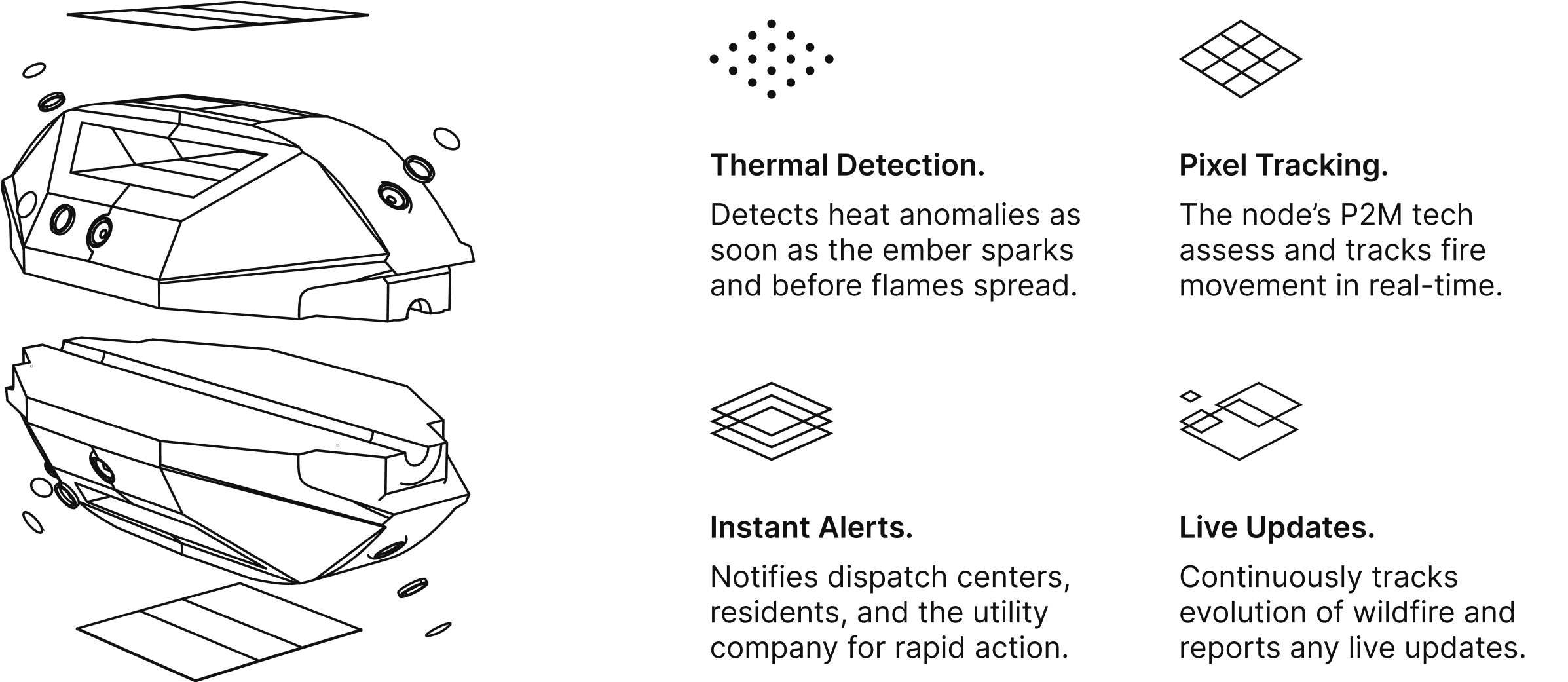
Our first node designs, created during this stage, were intended to be attached to a tree.
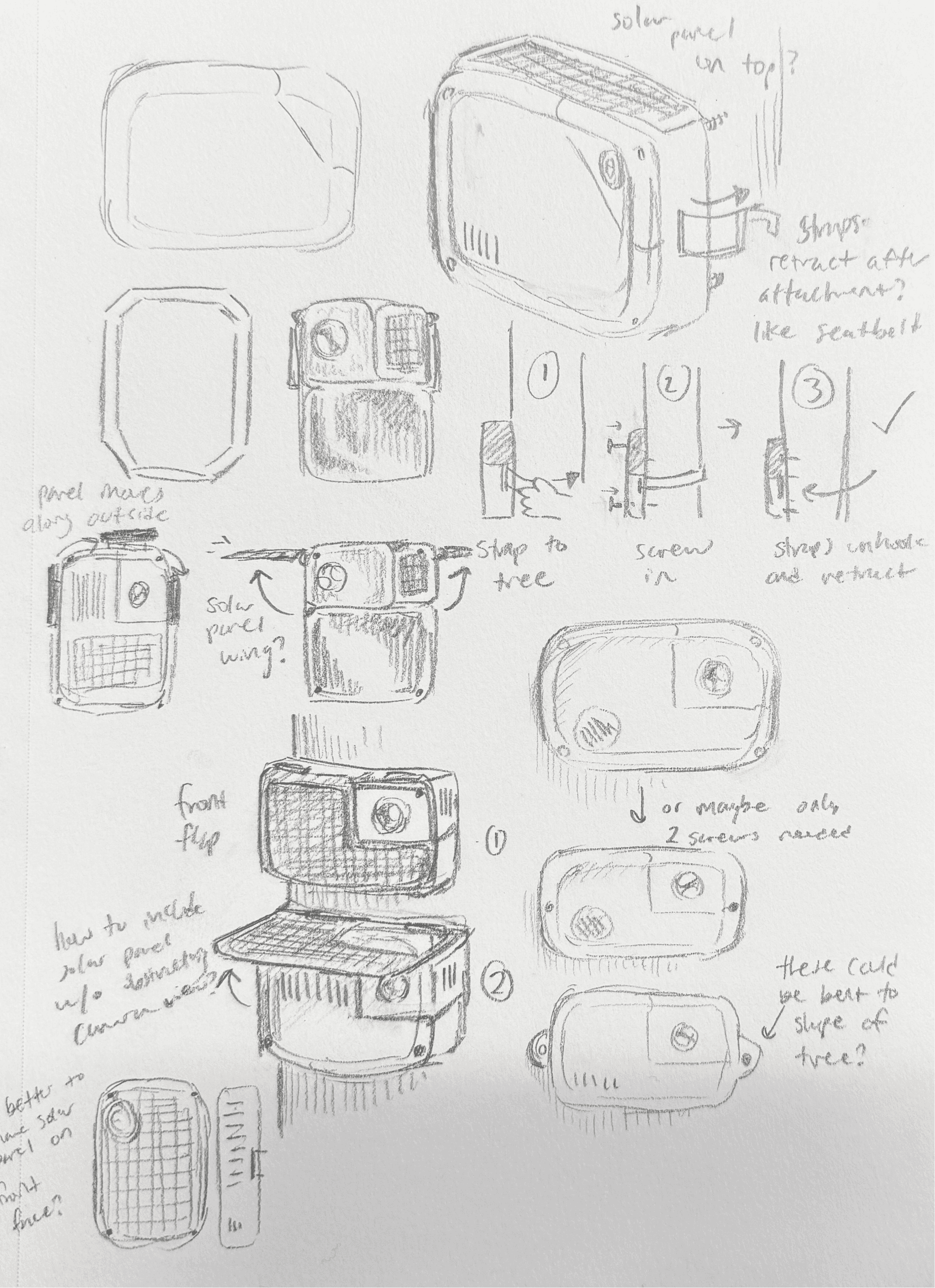
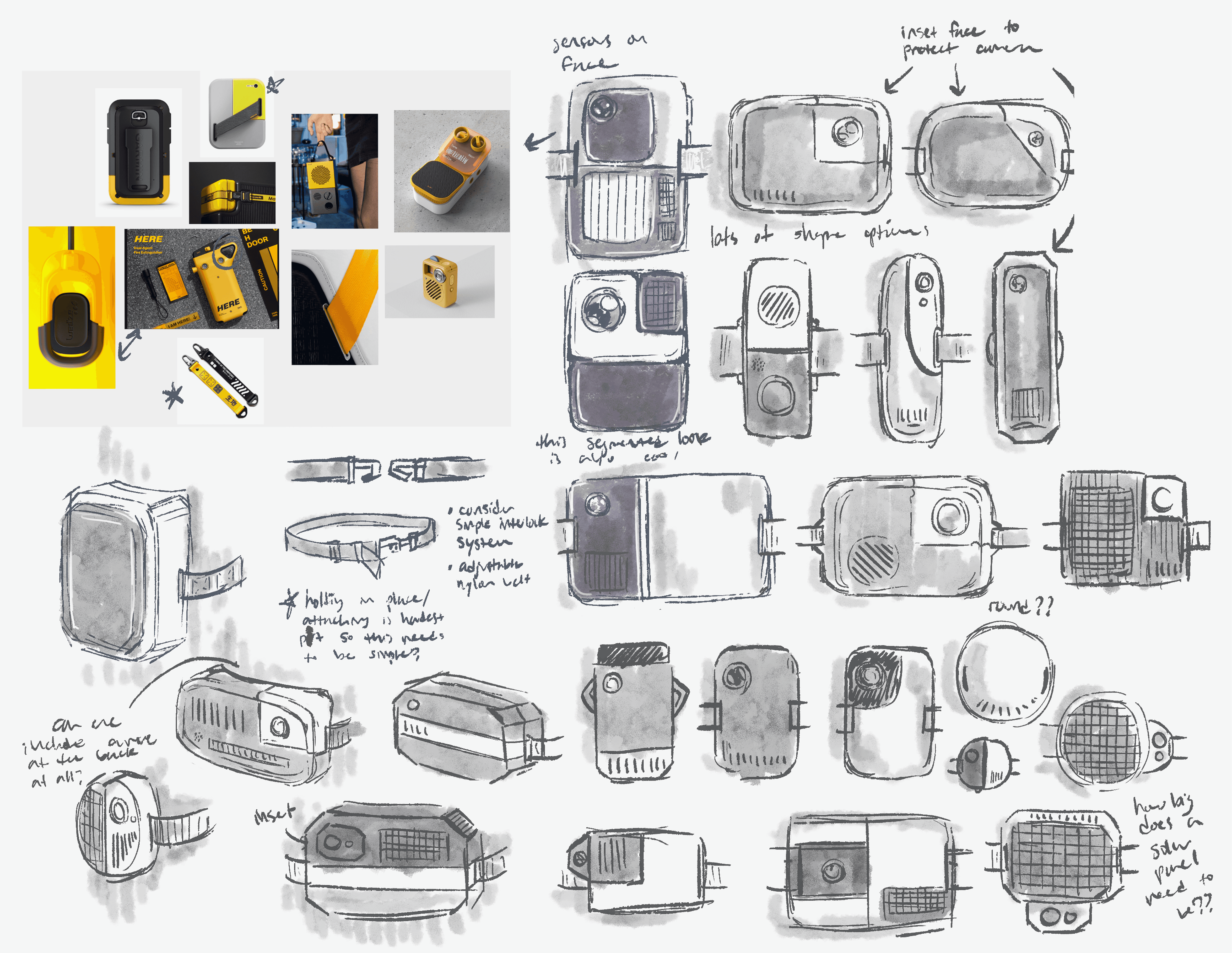

We conceptualized a system that residents would self-install, placing their own nodes on trees on their property.
Alerts from Torus monitoring their property and community would give them time to evacuate safely without feeling rushed. They would be able to see the coverage and status of all their own nodes.
How would Torus nodes be installed?
Installation was our key challenge, as the nodes needed a 360° aerial view while remaining accessible for maintenance and secure from theft. Our team brainstormed and built low-fi physical prototypes to experiment with various fastening mechanisms, to see which would be easiest for residents.
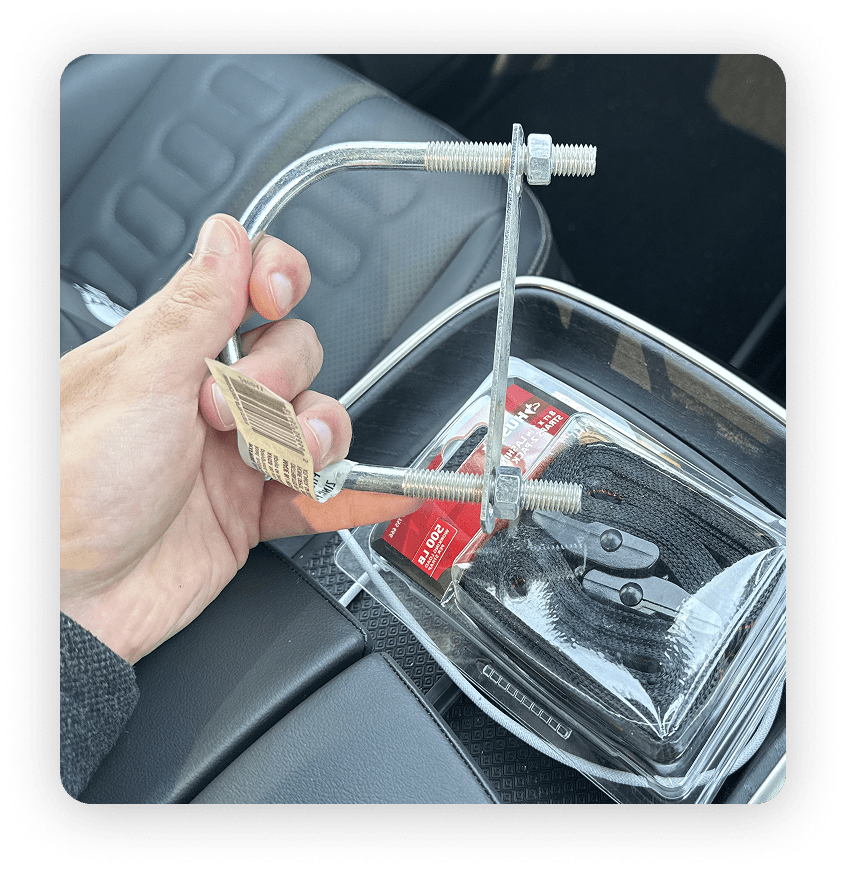
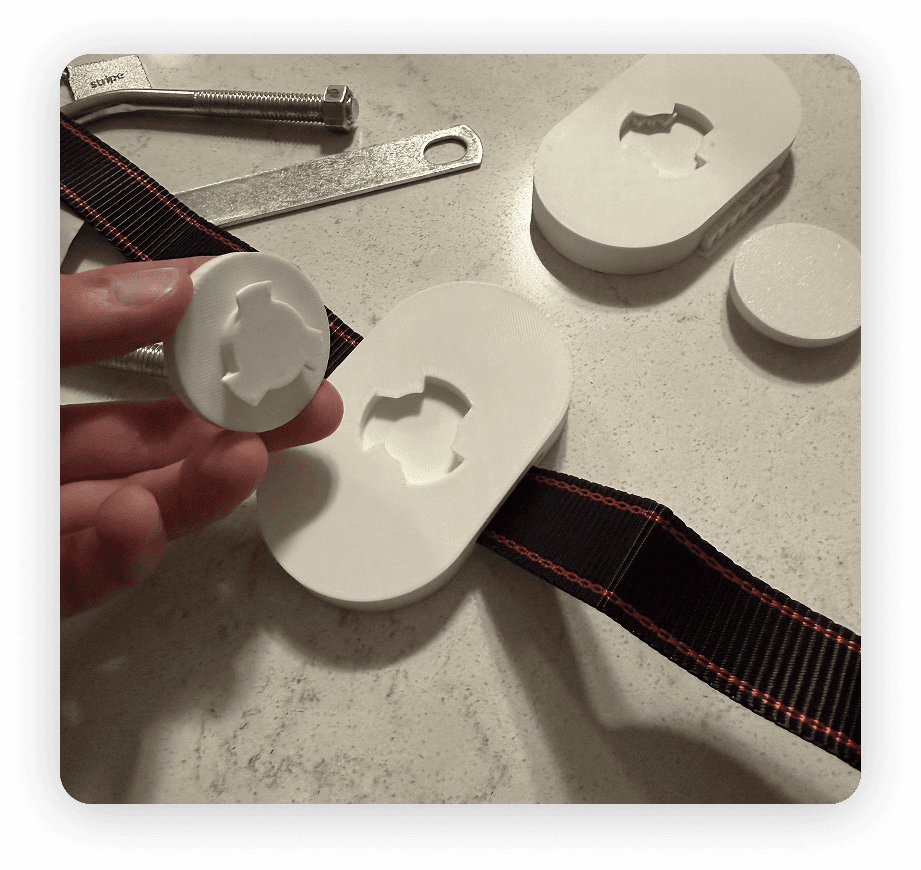
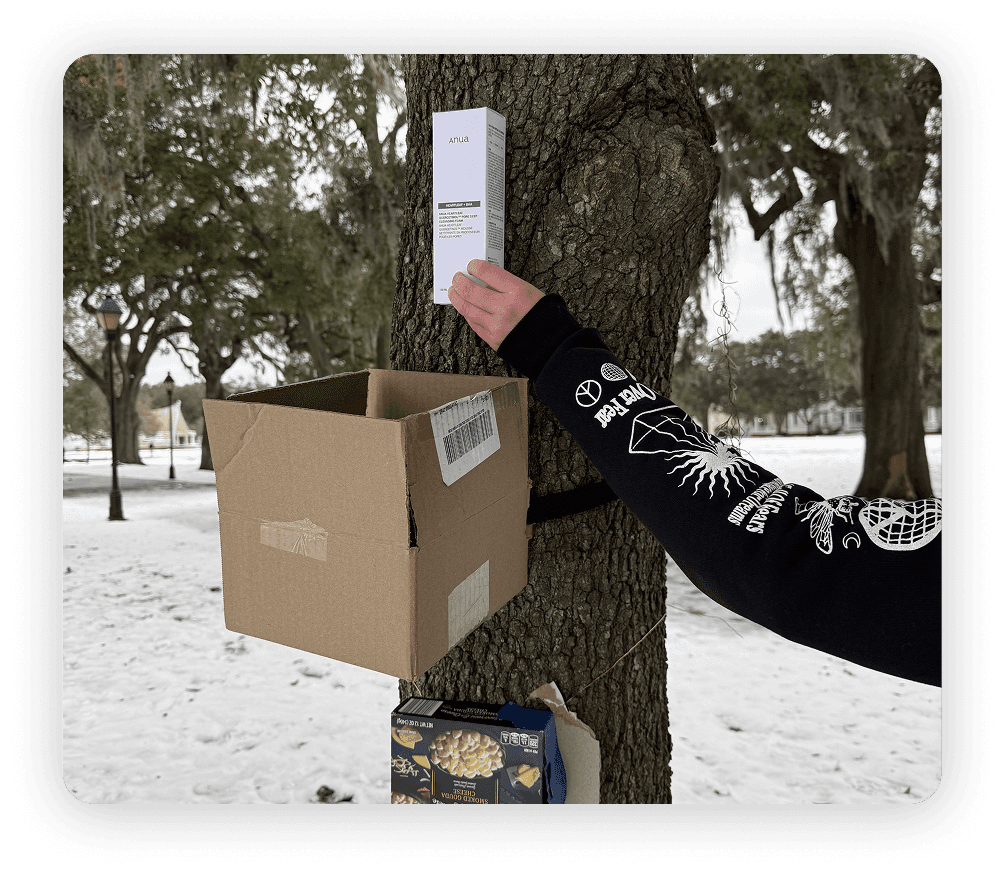
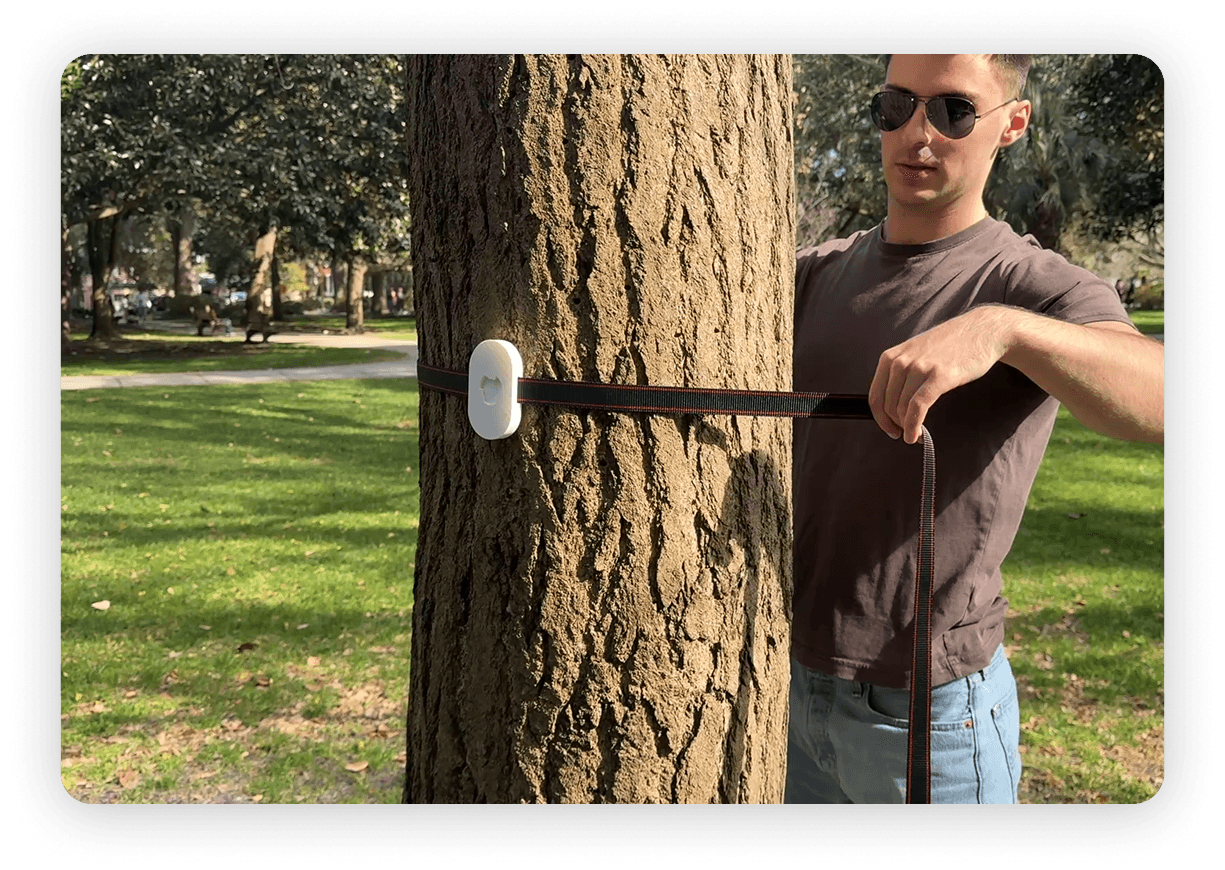
However, we realized here that our resident-focused system created critical flaws.
If the nodes are installed on trees like that, how will they cover a full 360-degree range?...
Each node seems expensive, considering it has the P2M tech and cameras
What about low-income communities? If they can’t afford it, won’t that leave gaps in protection?
For this to work, a lot of people need to adopt it… convincing so many people won’t that take too long?
If residents are responsible for maintaining their own nodes, what happens if they don’t?
Wouldn’t that make the system unreliable?
At this pivot point, we went back to the drawing board to redefine our system.
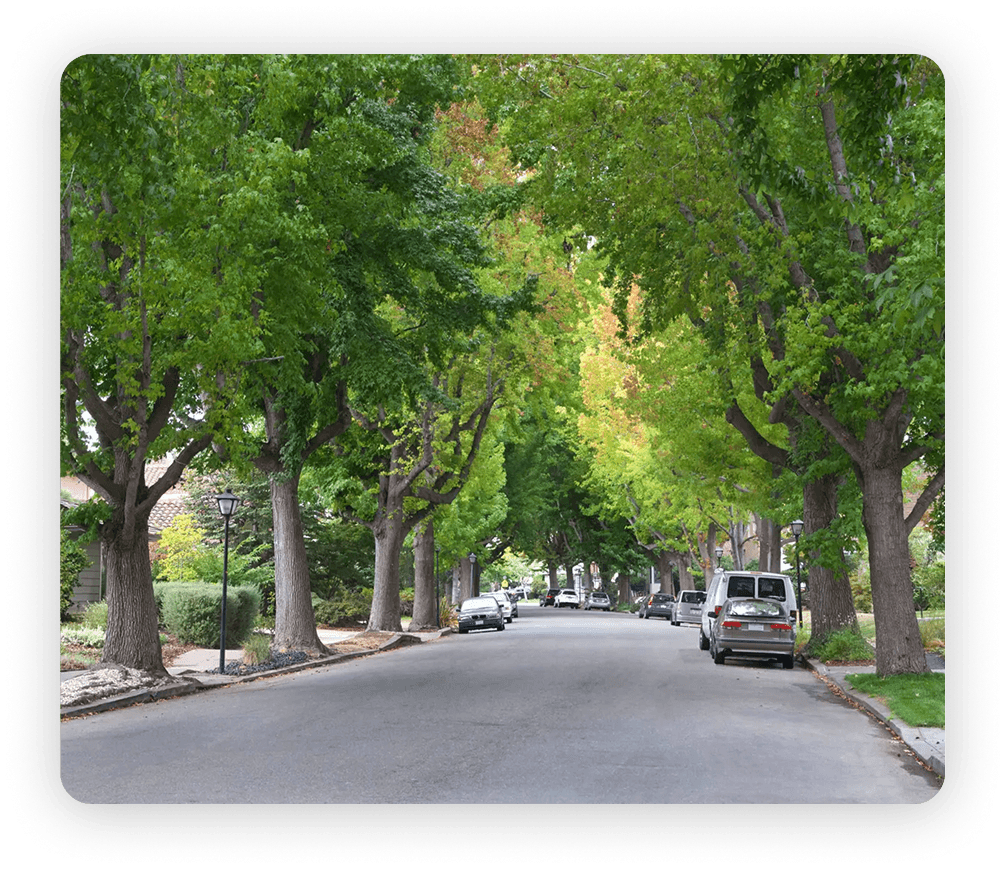
We recentered Torus around utility companies and existing infrastructure, specifically power lines - a leading cause of wildfires.
Installed at high aerial vantage points, power lines cover cities, towns, and remote areas. Utility companies already use drones to maintain power lines, these same drones can now install Torus nodes for both maintenance and wildfire detection.
400 wildfires a year are sparked by power lines in California alone. Utility companies pay out billions to compensate those who lose property, but the loss of a life cannot be repaid.
Concept Refinement
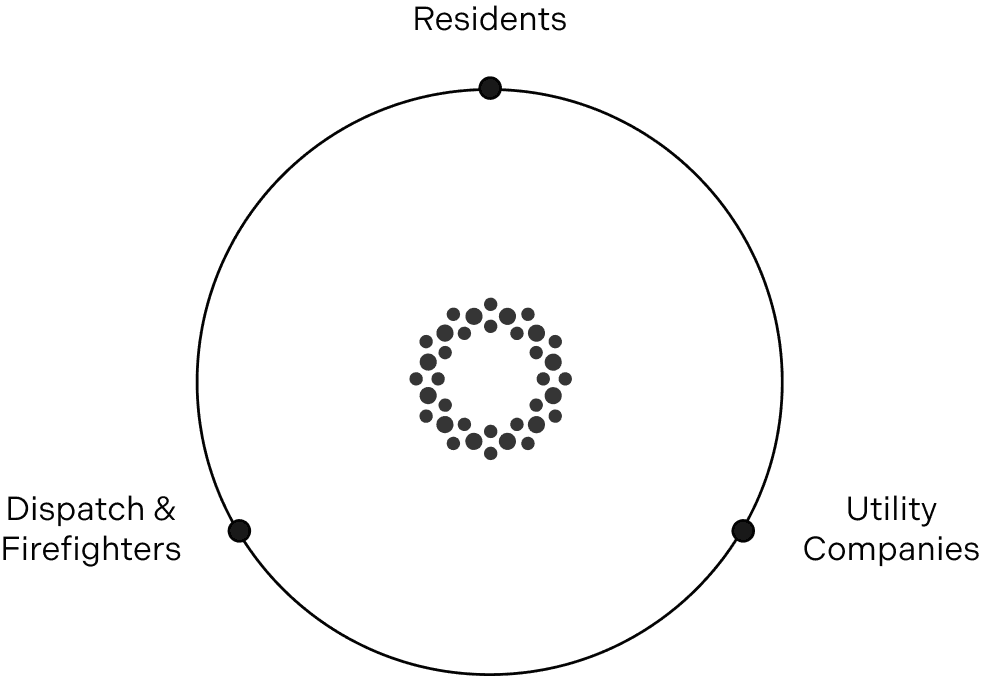
When Torus is in action during a wildfire…
Residents will receive immediate alerts when a fire ignites nearby, minimizing panic.
Dispatch will have actionable data to make informed decisions for fire teams.
The utility company will be notified of the power line sparking, and can shut off the power immediately.
With our new, power line focused concept, the node needed to be redesigned.
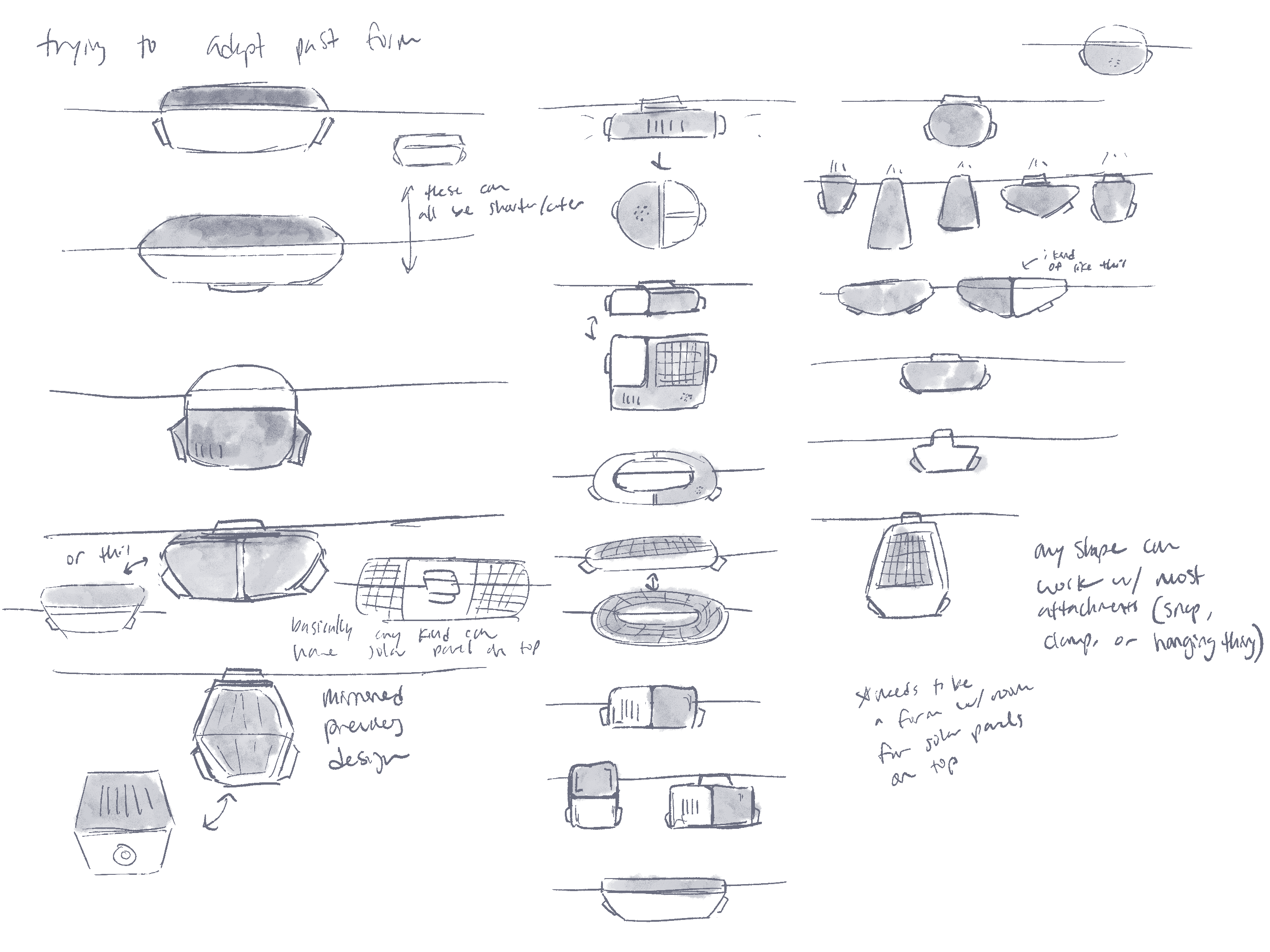
We returned to ideation and created a new form, one which could be clamped around a power line.
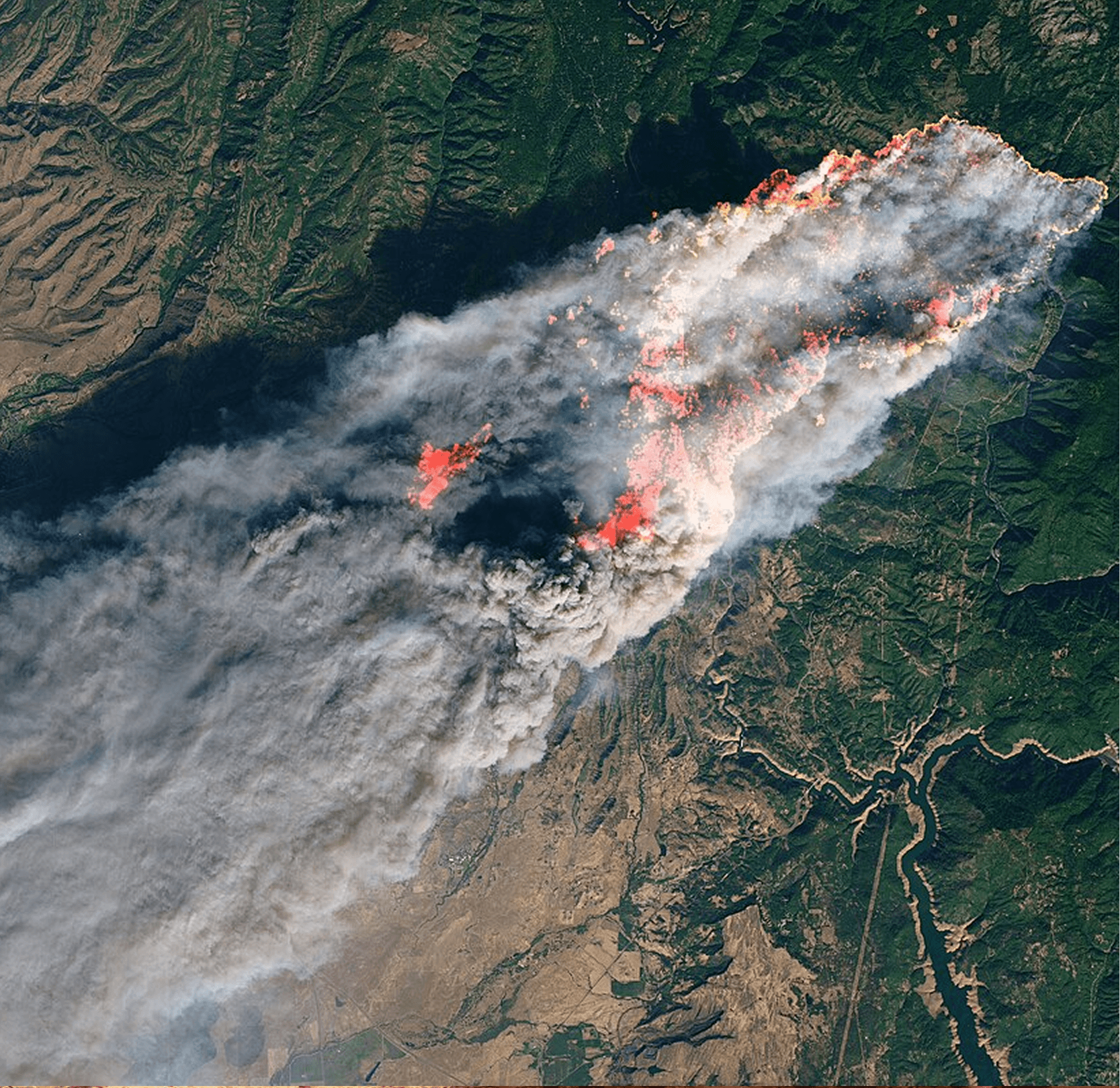
Torus required the creation of four unique, specialized interfaces.
Since Torus sends fire alerts to dispatch, firefighters, residents, and utility companies, each needing different information, we focused on designing tailored interfaces that deliver exactly what each audience requires.
To understand what firefighters see in their databases, we interviewed a local Savannah fireman about the key information needed before responding to a fire.
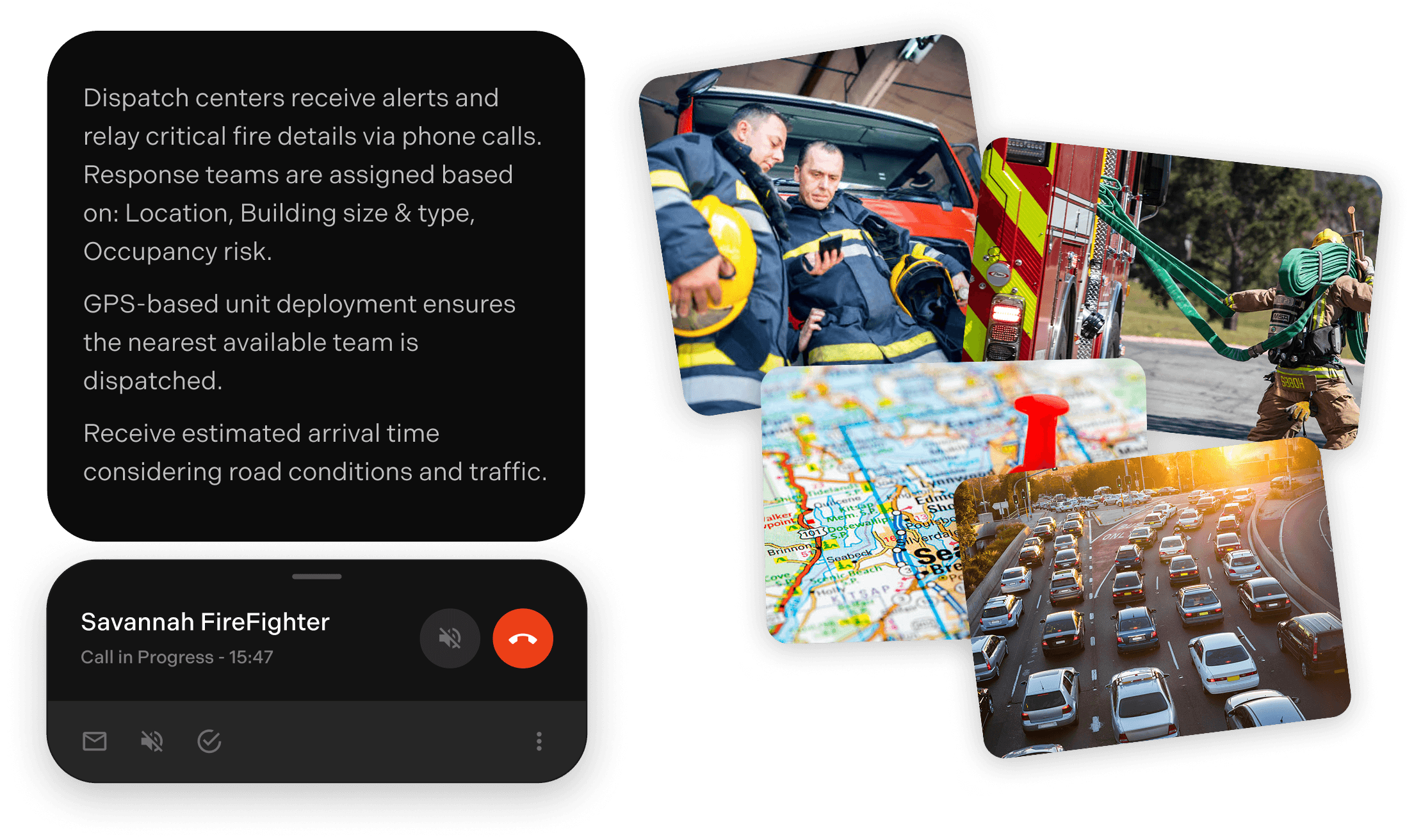
This helped us to better understand the role of dispatch in a wildfire scenario.
From our interview, we learned that dispatch plays a critical role in firefighting operations, making all key decisions, including which station responds, how many people are sent, and what equipment is needed based on the fire’s severity, location, and occupancy risk.
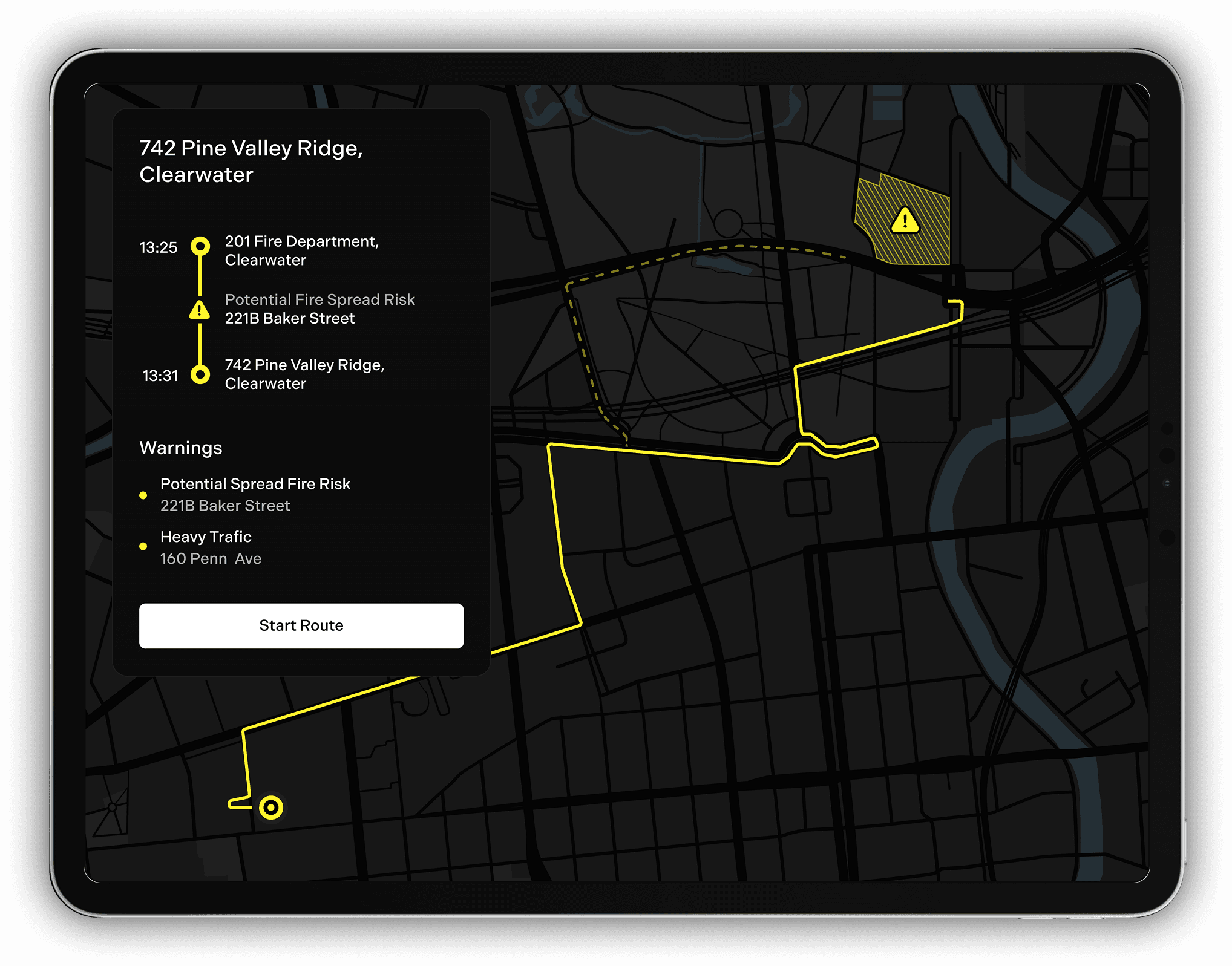
The firefighter emphasized the need for optimized routes to reach fires quickly and rely on real-time updates about the fire’s size, exact location, and surrounding structures or residents at risk. We applied these insights as we began designing our interface.
Firefighter dashboard evolution
From early sketches to mid-fidelity Figma screens, we explored layouts, key information, and user flows for the Torus firefighter interface. While the goal was to integrate Torus data into existing systems, our designs demonstrate how that integration could look.
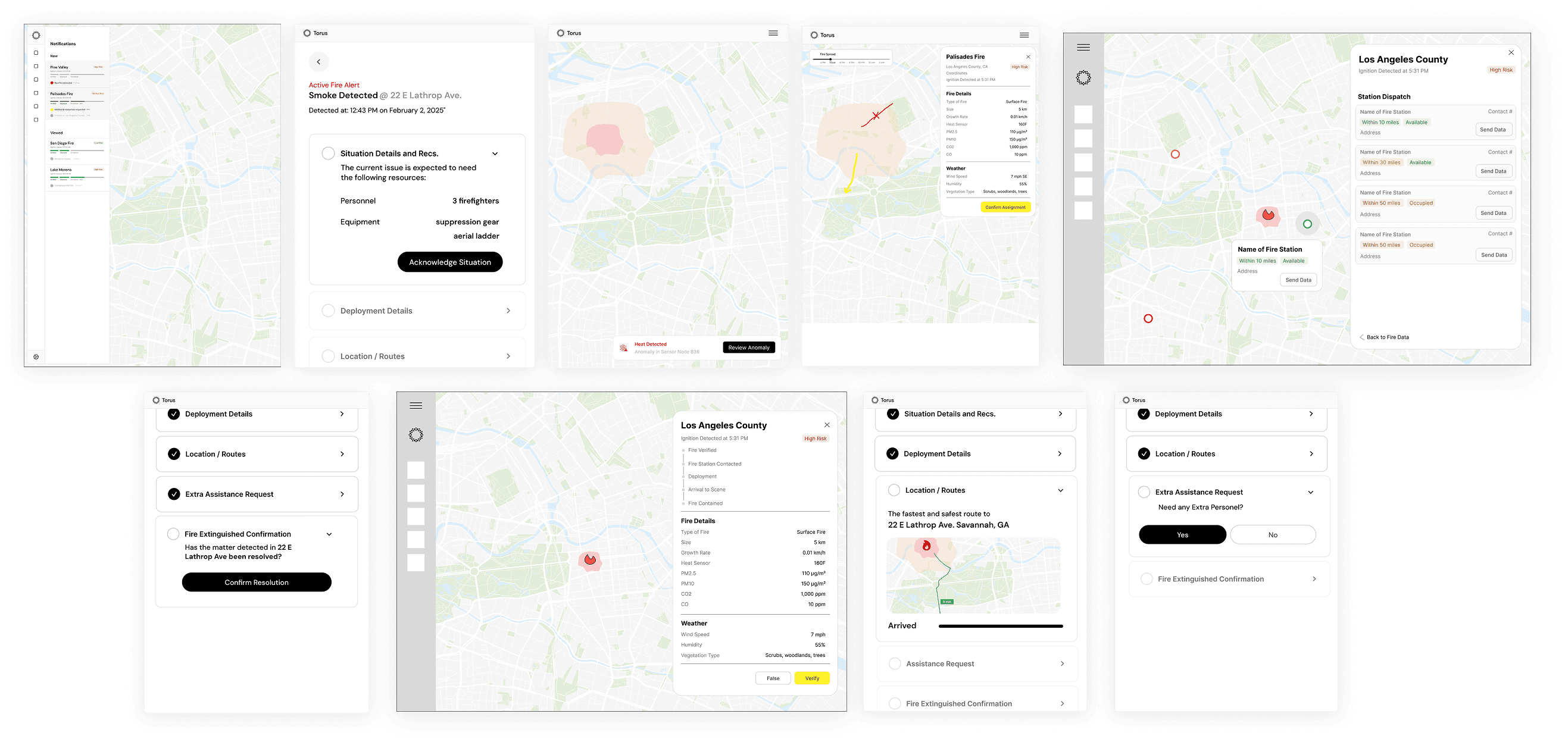
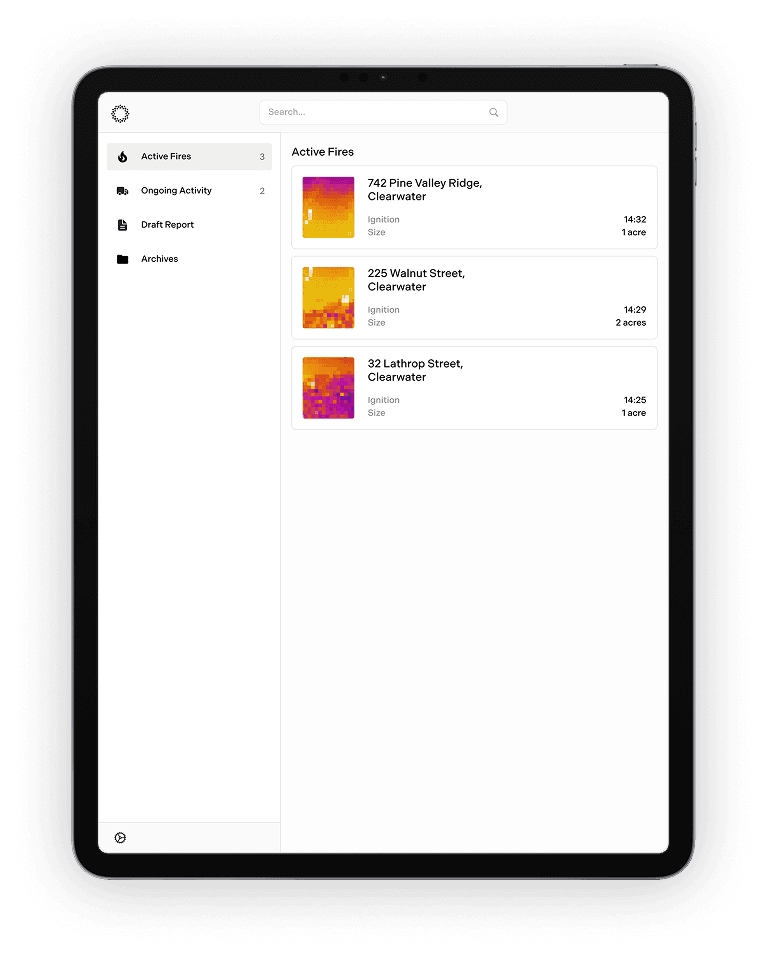
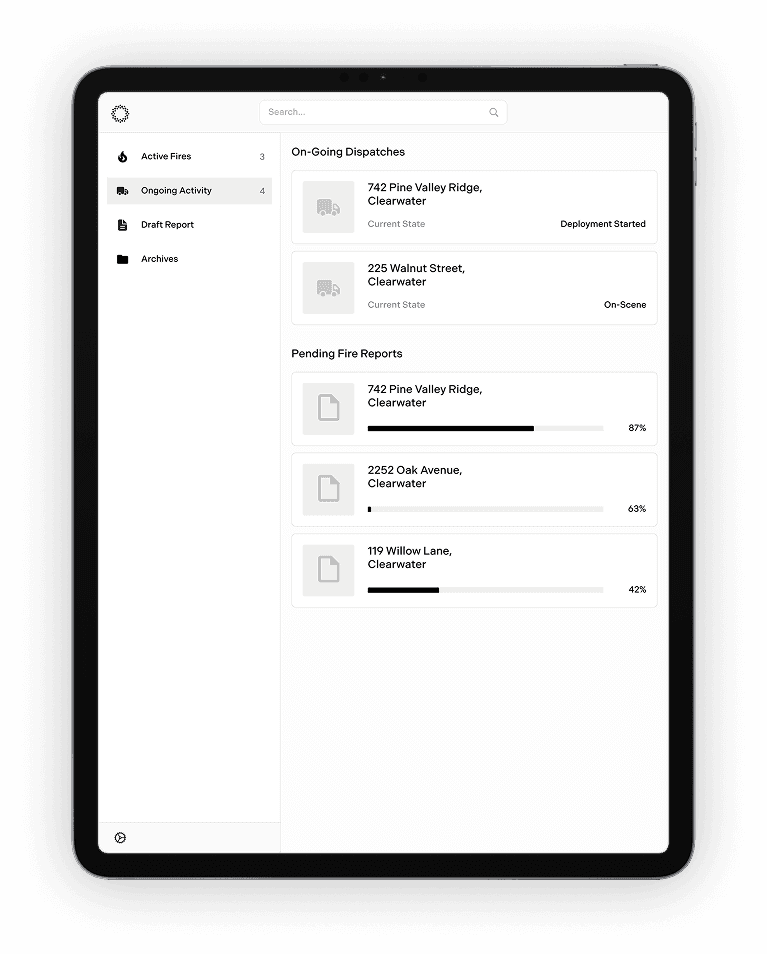
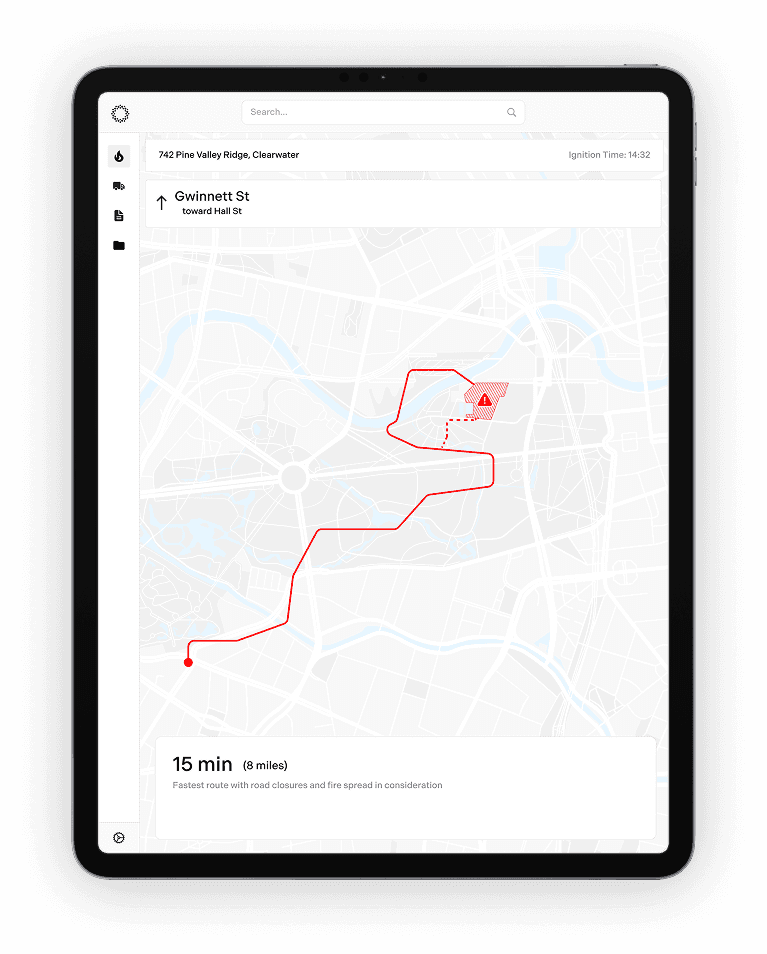
Four firefighters reviewed our mid-fidelity screen designs to help us validate the content and information flow. During the walkthrough, we uncovered unnecessary content, some meant for the wrong audience, and highlighted which elements were truly valuable.
The biggest takeaway: simplify the dashboard even more. Firefighters primarily need key fire data and a clear, optimized route.
Final firefighter dashboard
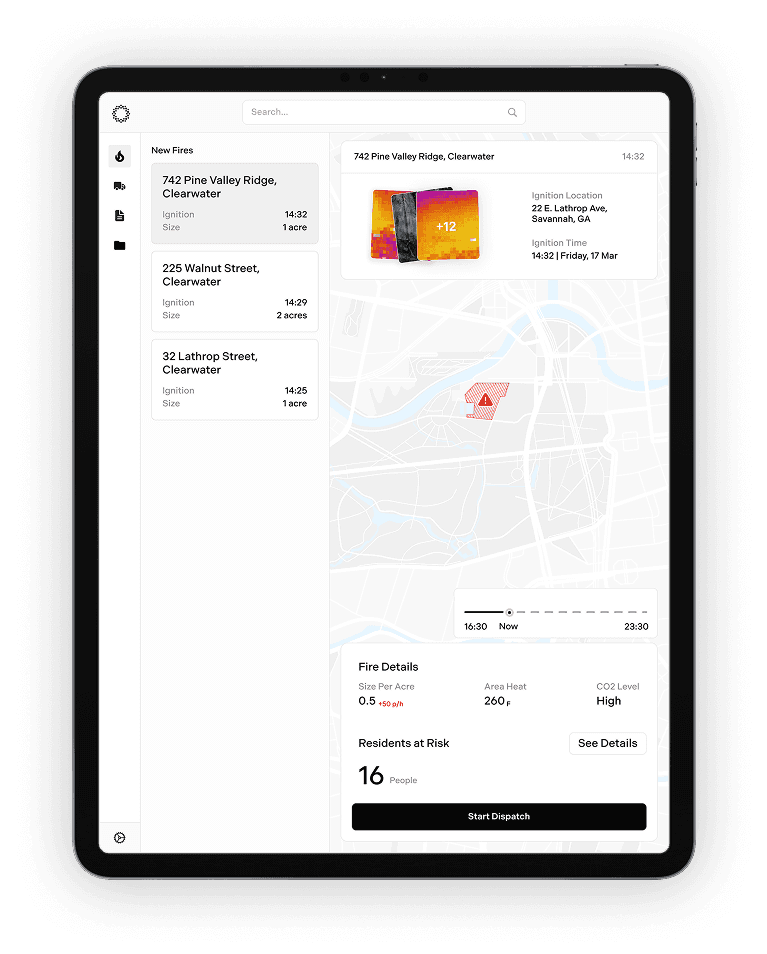
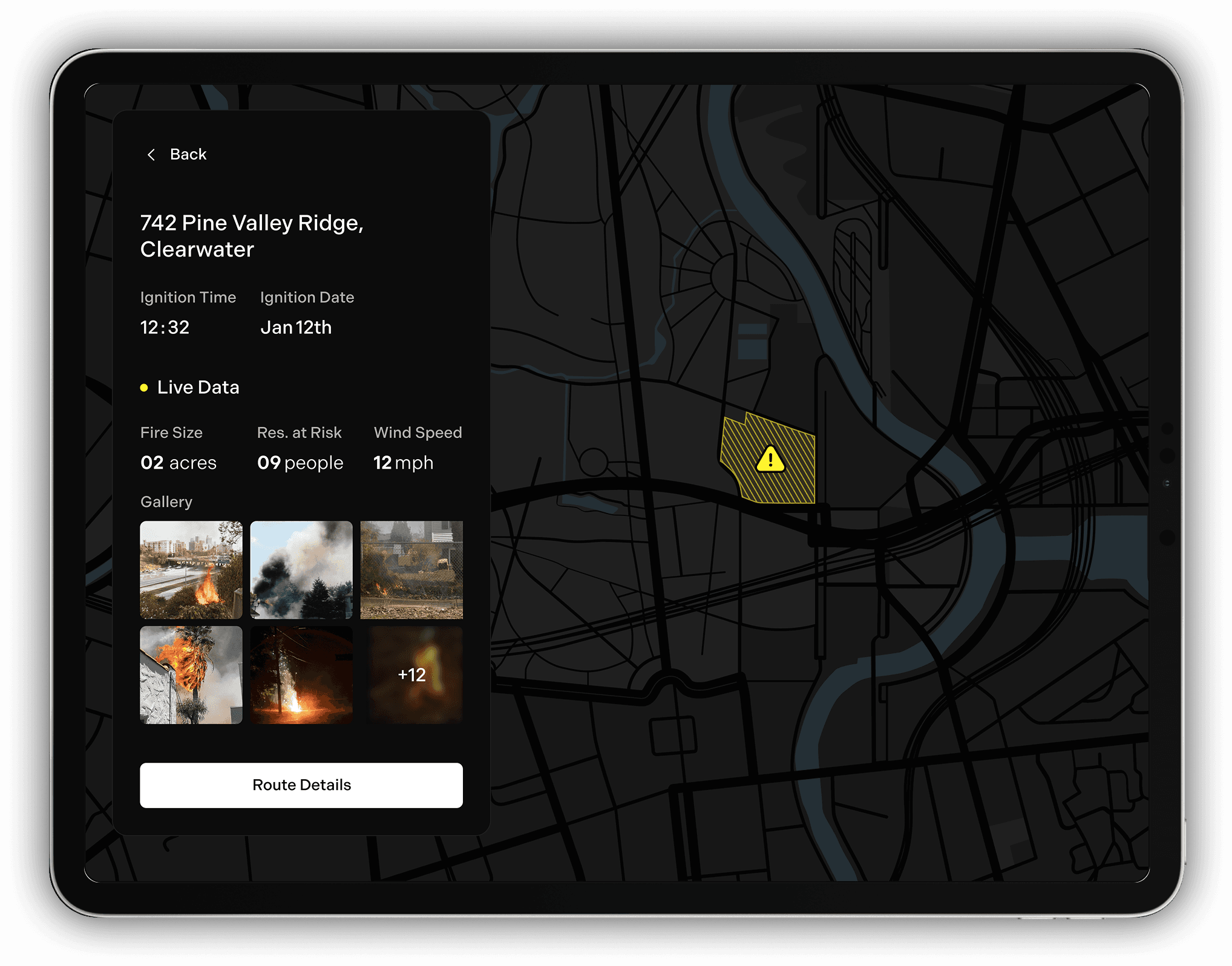
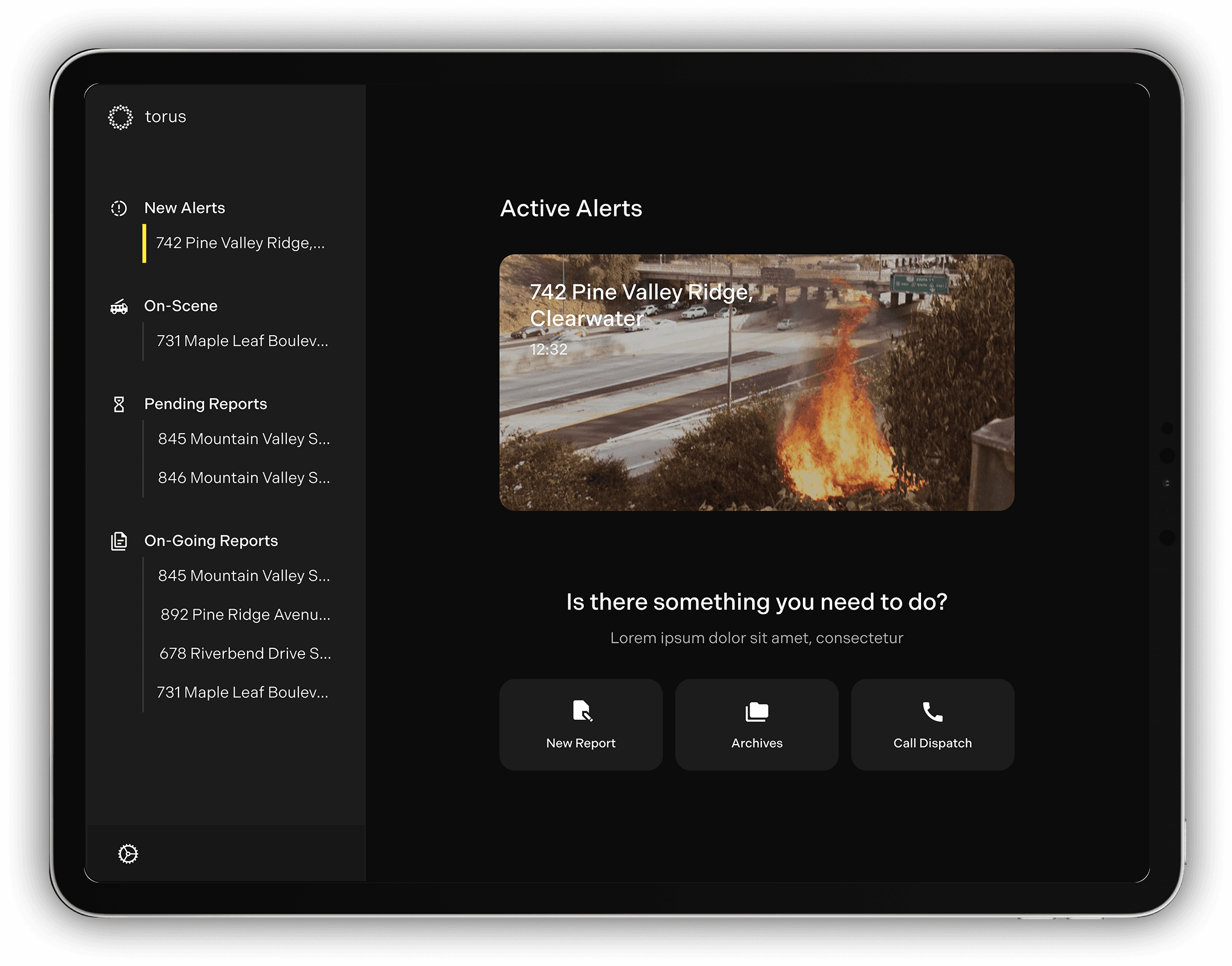
In the final dashboard, firefighters receive alerts from the dispatch center. Clicking into an alert first shows them live fire data, such as size, people at risk, wind speed, and images. Then, they get their optimized route to the fire.
Final dispatch dashboard
Dispatch centers are the first to receive fire alerts from Torus nodes. Their role is to verify the threat using the images and data provided, then determine which fire station responds.
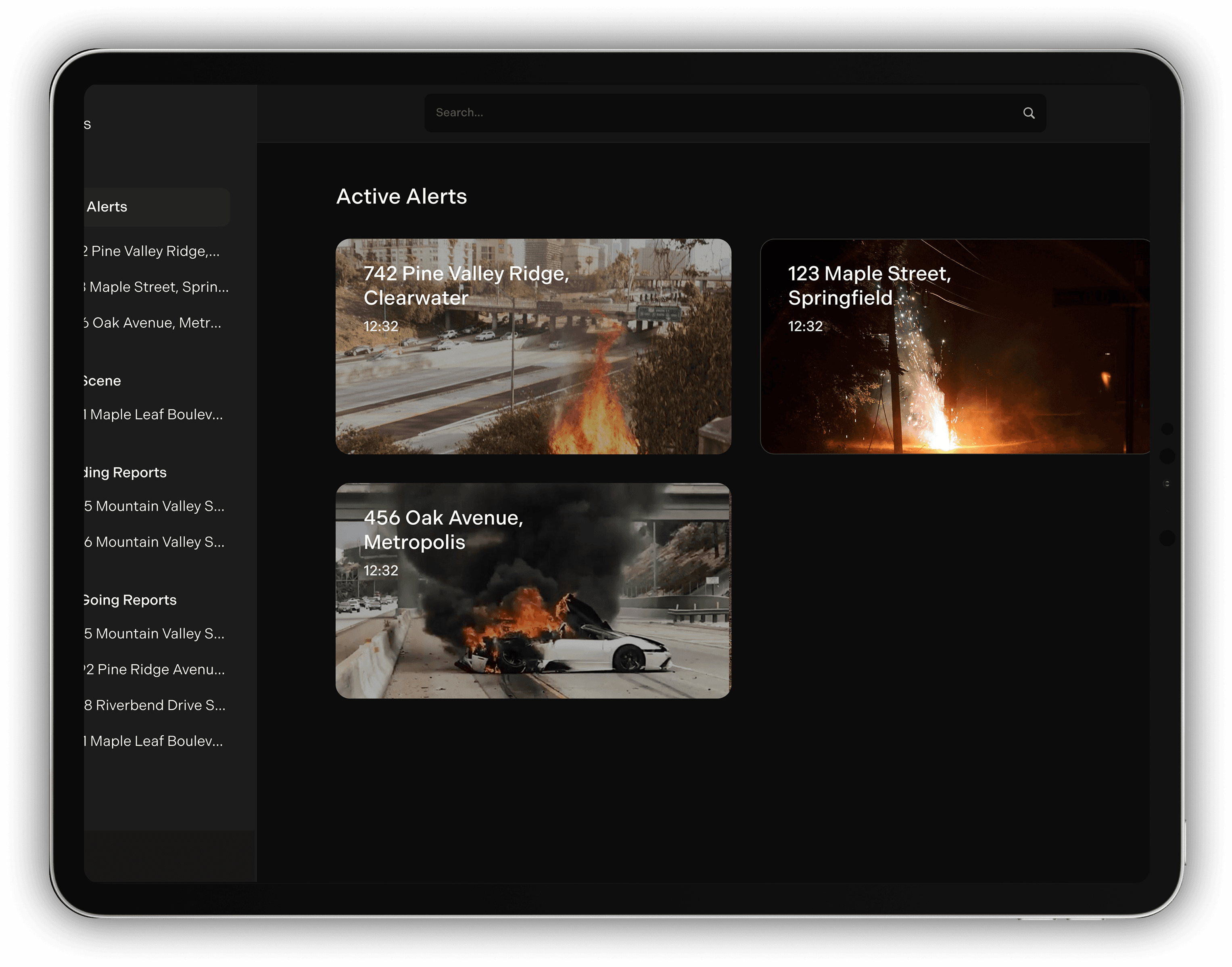
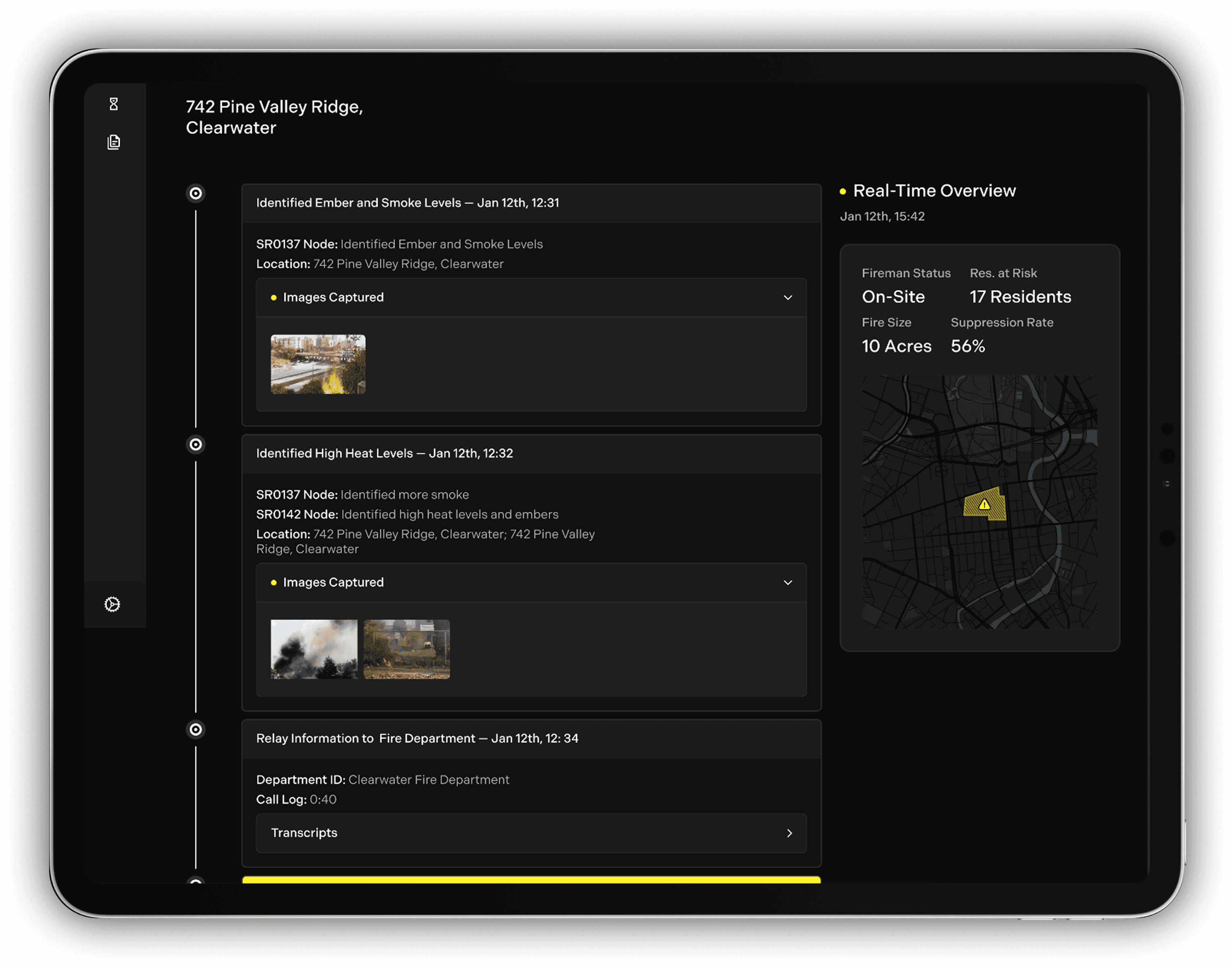
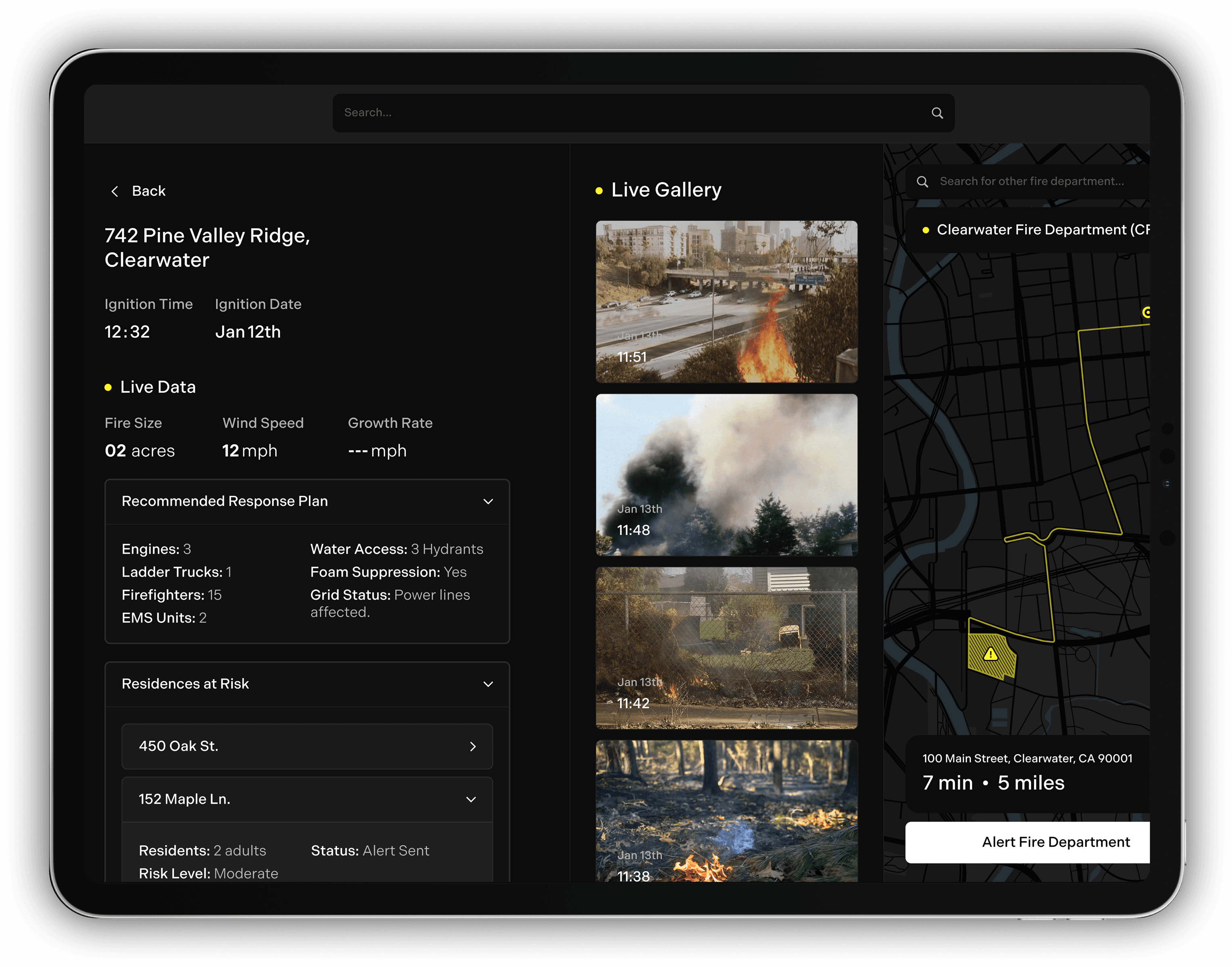
Throughout the incident, they stay in active communication with the fire team. AI assists by logging ignition times, incoming calls, and key developments, streamlining post-fire reporting.
Final utility dashboard
If a fire originates from a power line, utility companies are immediately notified to shut off the line. They also manage the Torus node network, which serves a dual purpose, monitoring for both fire hazards and maintenance issues.
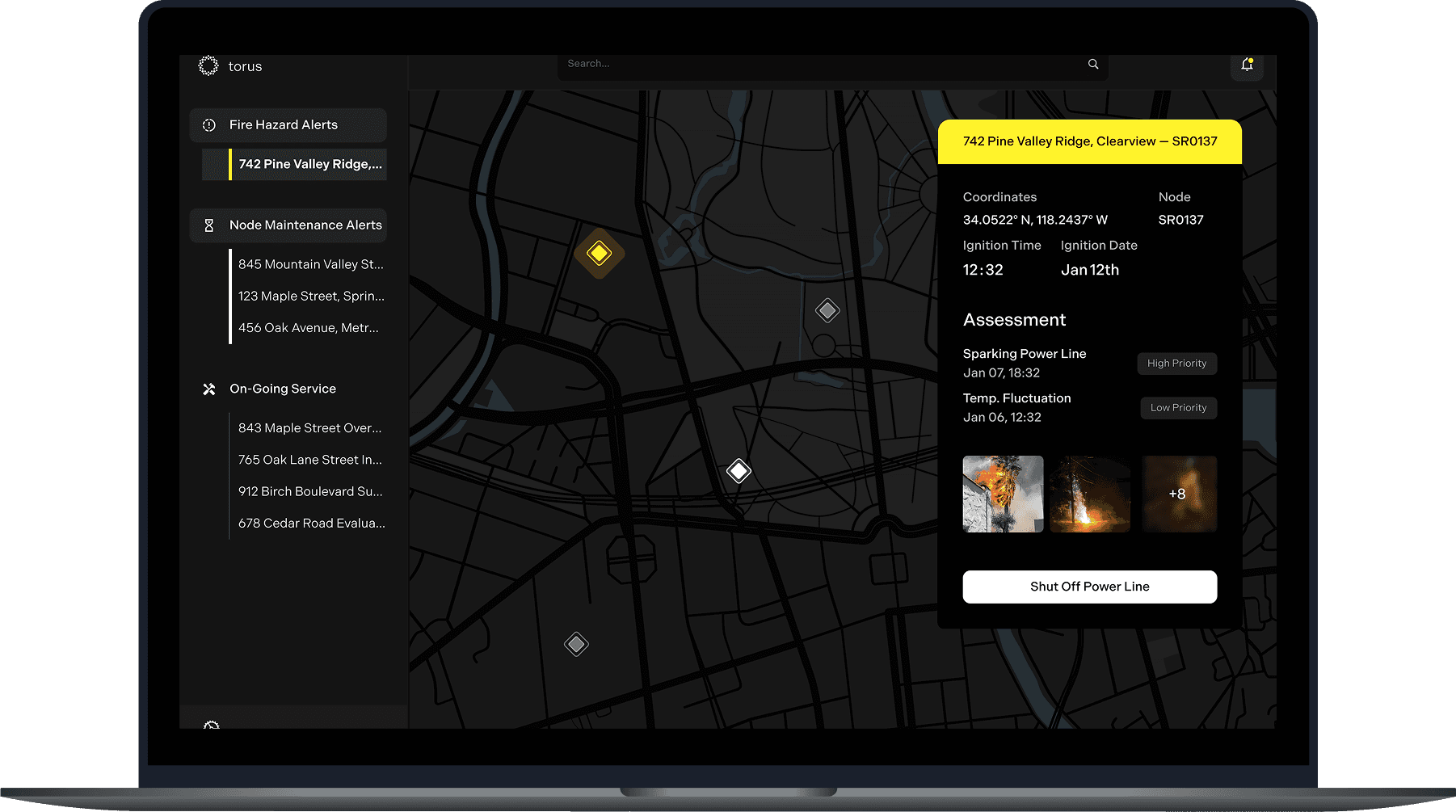
On the utility dashboard, each node is represented as a diamond: yellow indicates a fire hazard, while white signals a maintenance alert, giving operators a clear, real-time map of network activity.
Resident app, the heart of Torus.
From the very beginning, we knew we wanted to solve for residents: keep them informed of dangerous fires nearby so they can stay informed, know when and how to evacuate, and prevent back-ups and panic.
From the start, we iterated to understand residents' needs and expectations in handling hazards, and how Torus could help.
User testing: Round 1
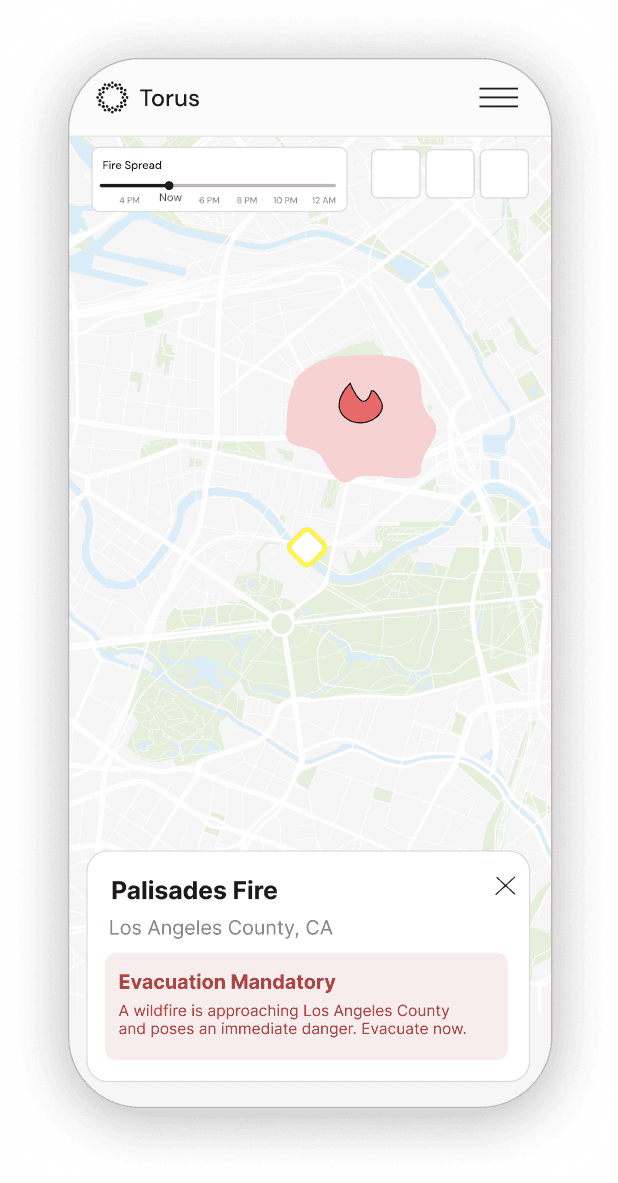
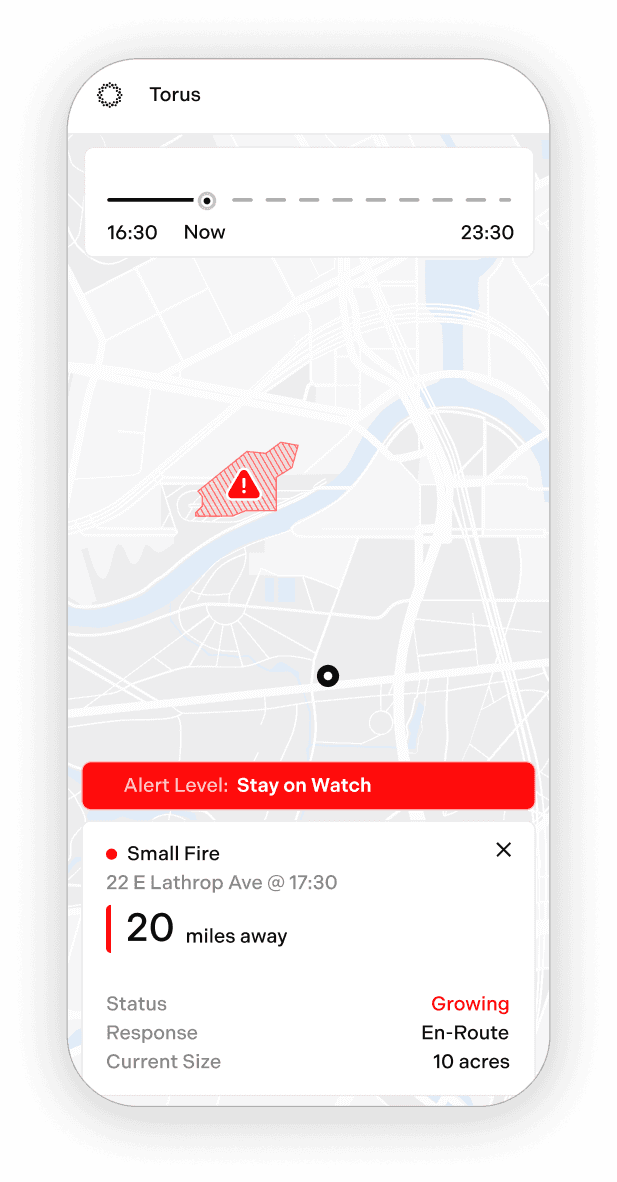
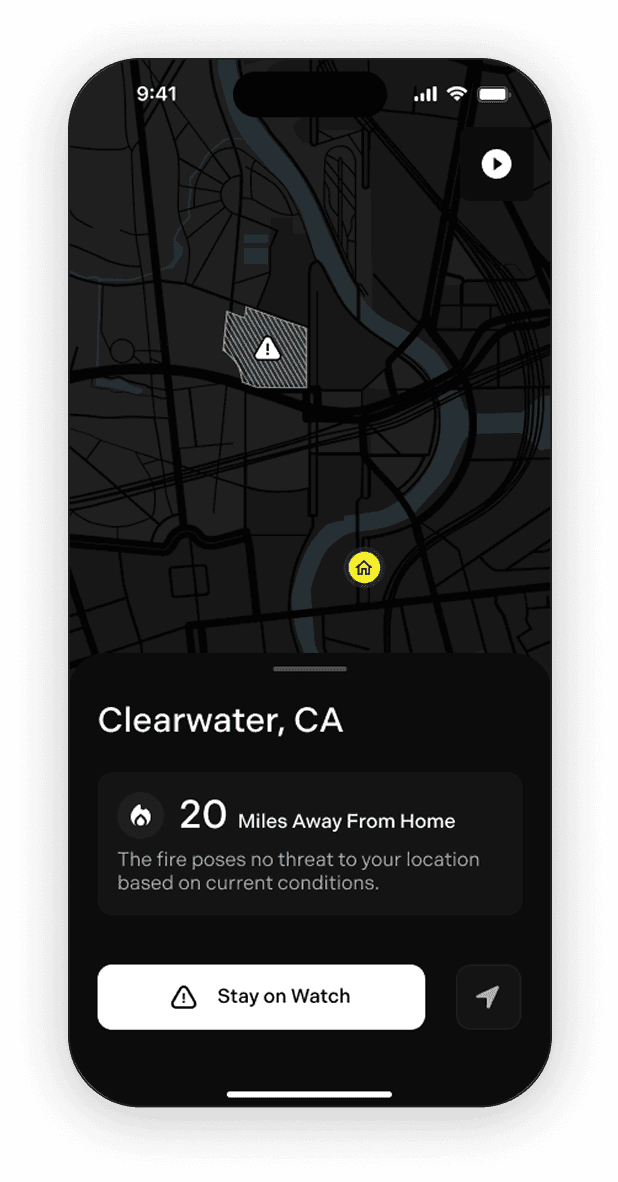
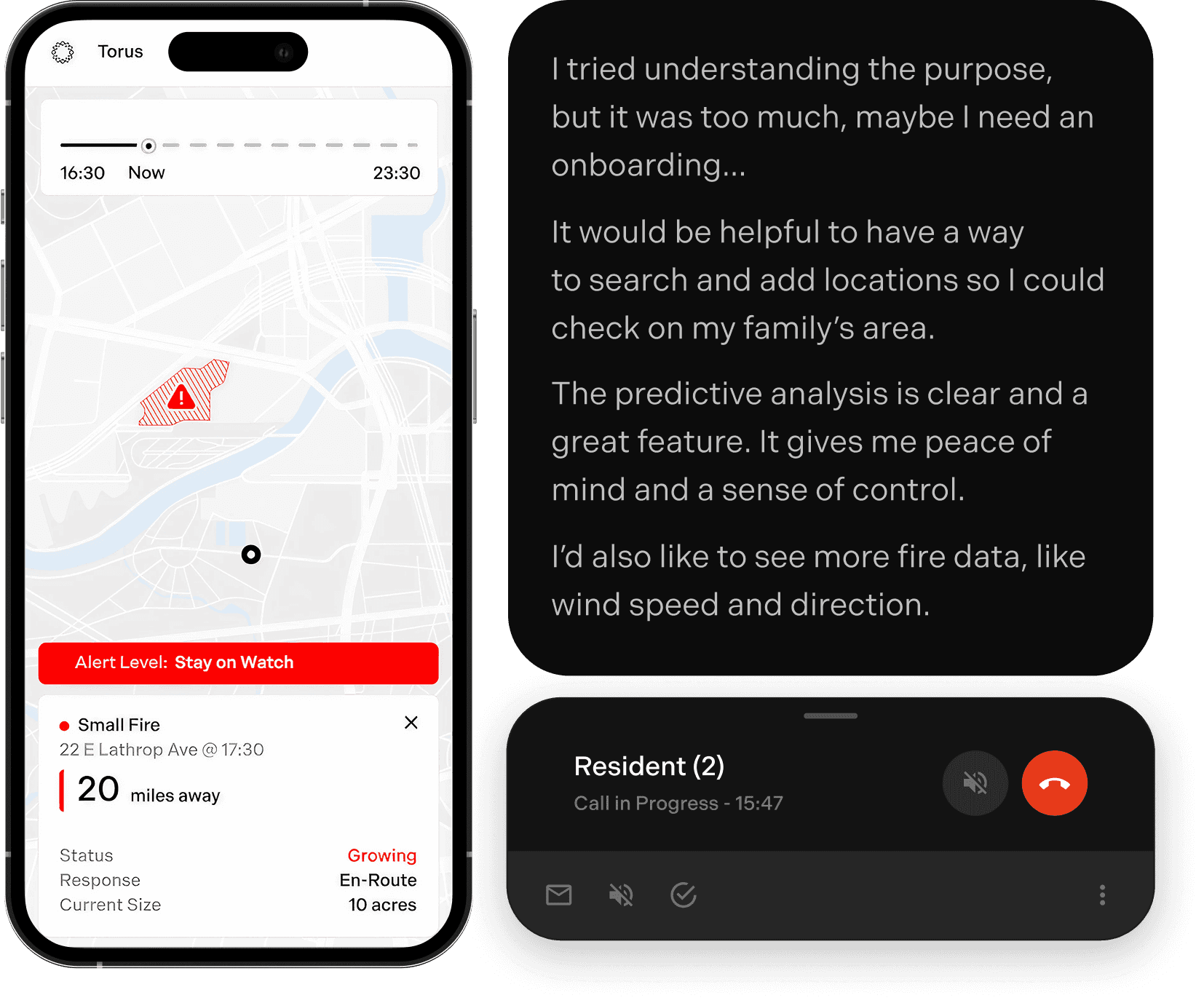
The app began with a simple goal: to show how far the fire is from your home, its severity, and what actions to take. We then introduced a “predictive fire spread” feature, where AI estimates how the fire is likely to spread in the coming hours, helping residents stay informed and prepared.
Users expressed a desire for more functionality, such as the ability to search other locations to check on family members and access more detailed fire data.
User testing: Round 2
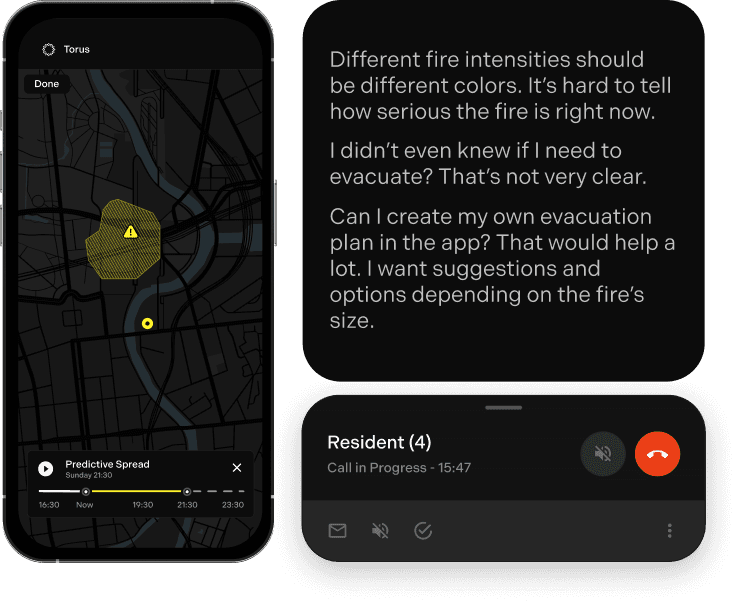
In the second round of designs, we adopted a layout similar to a weather app, featuring clear data visualization, an expandable map showing predictive fire spread, news updates, location search, and dynamic evacuation routes when the situation requires.
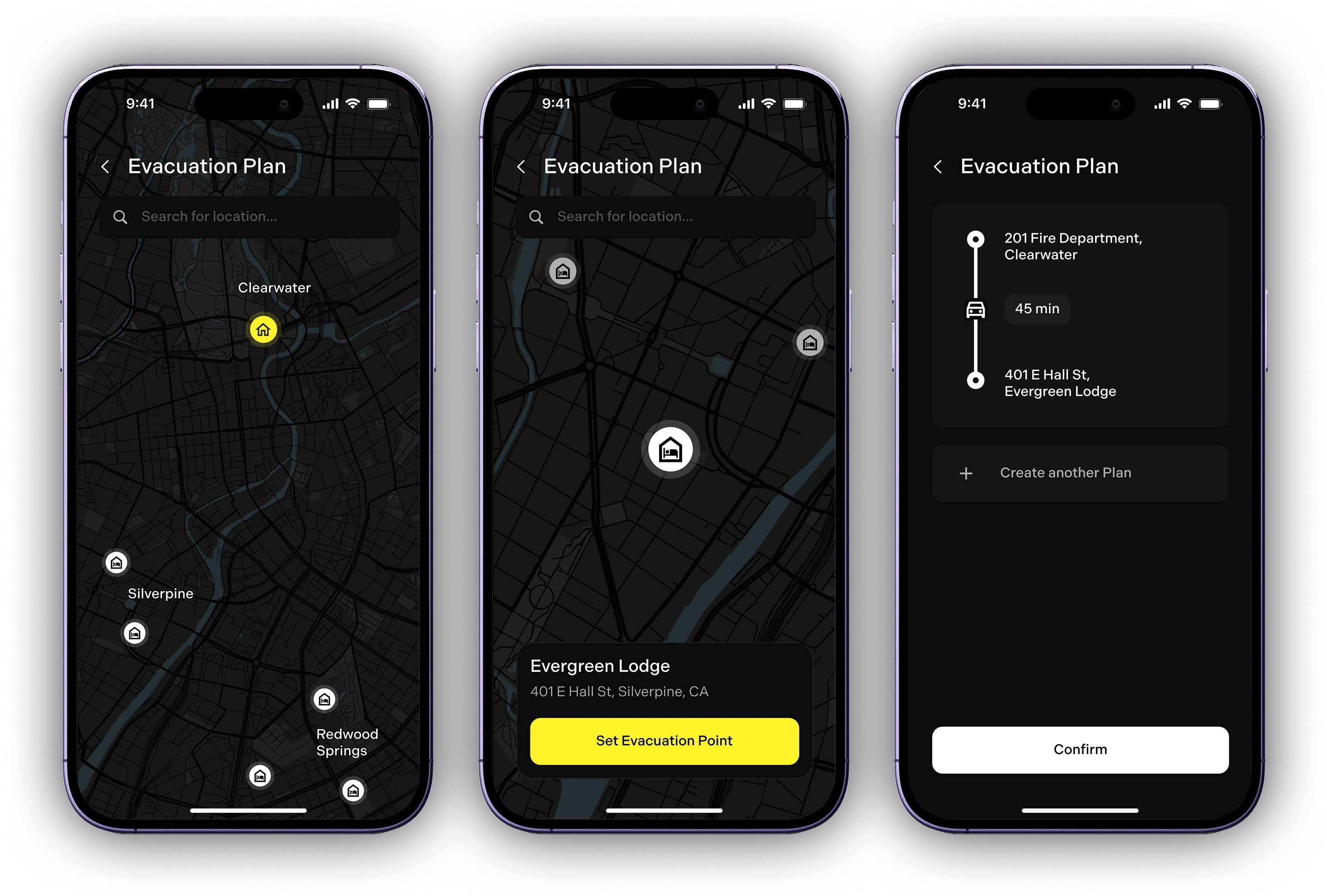
Testing revealed several areas for improvement: some clickable elements weren’t intuitive, fire intensity wasn’t clear enough, and users wanted features to create personalized evacuation plans, including options to evacuate beyond city limits.
Final Resident App
Residents can see how close a fire is, what to do, how it may spread, and its containment status.
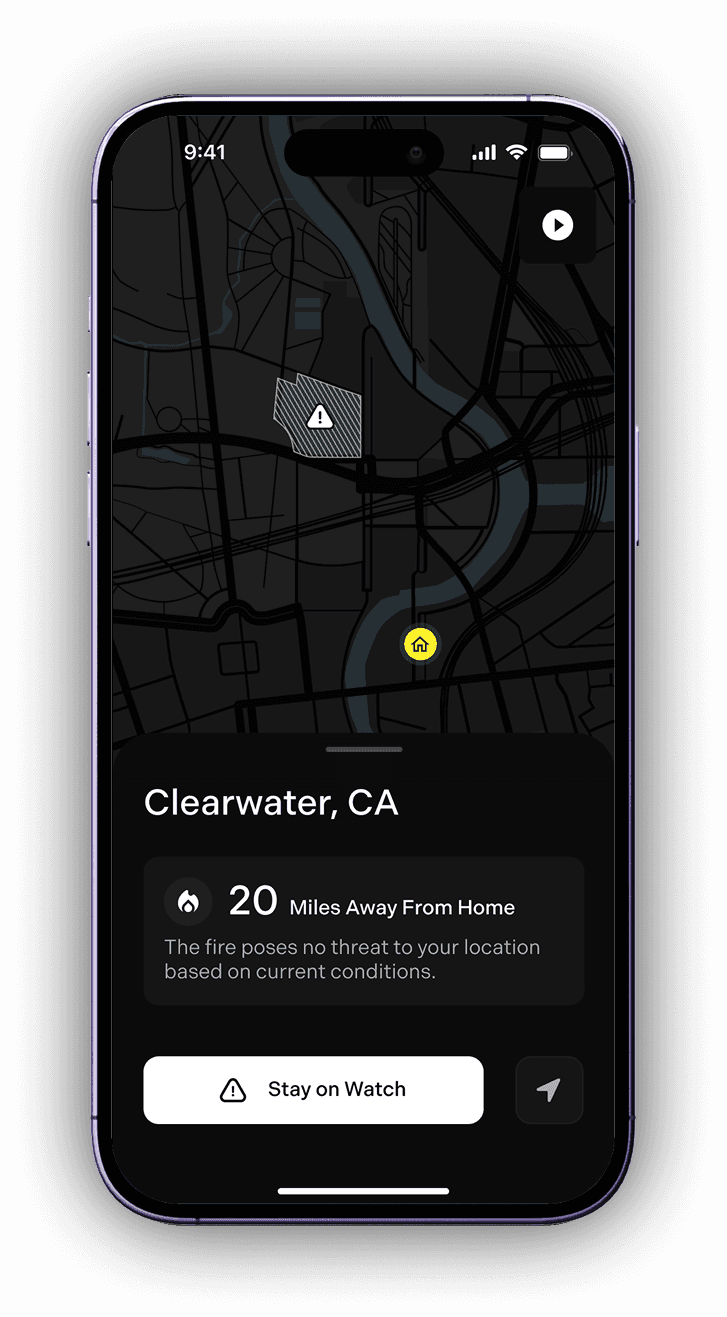
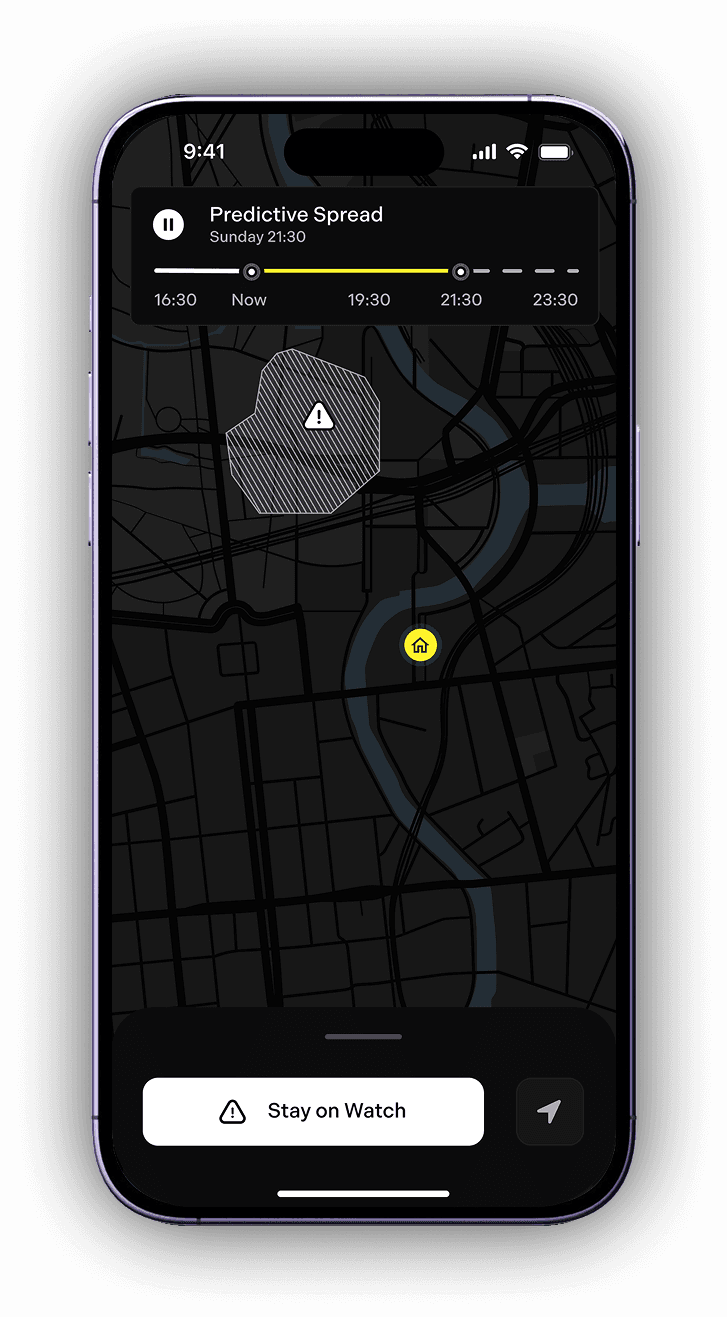
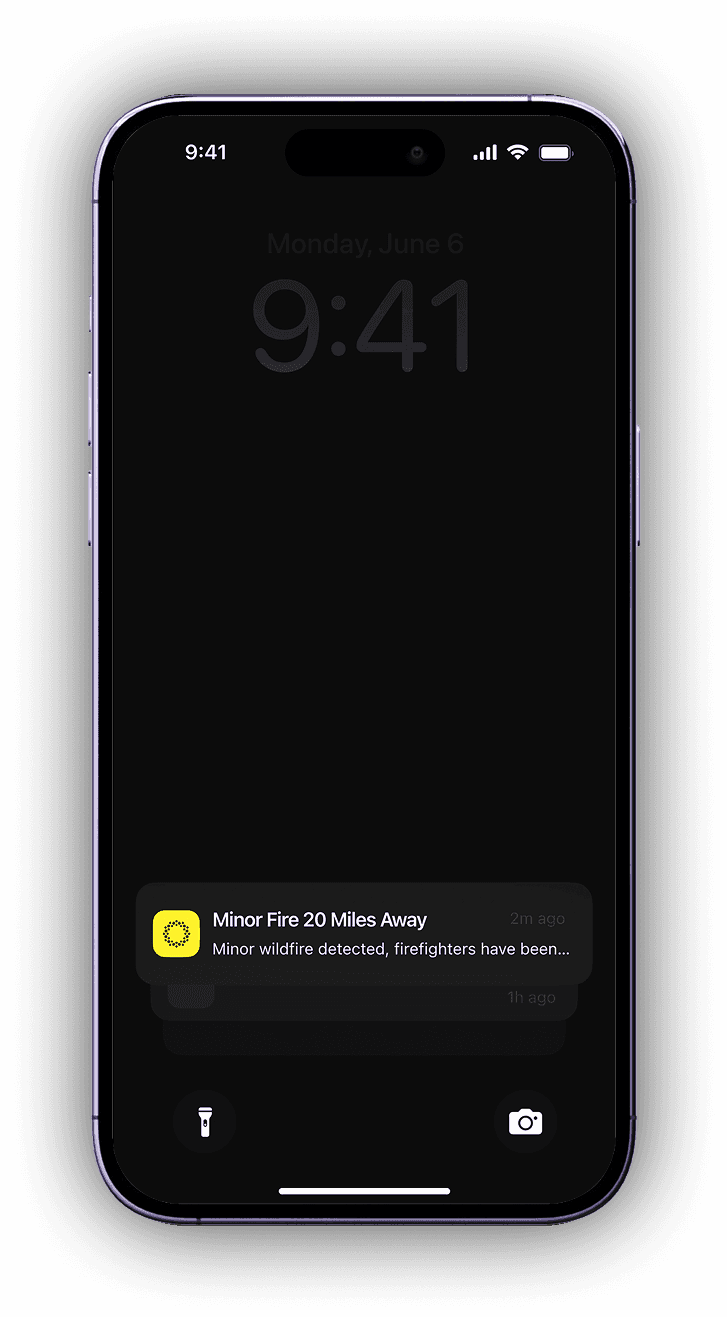
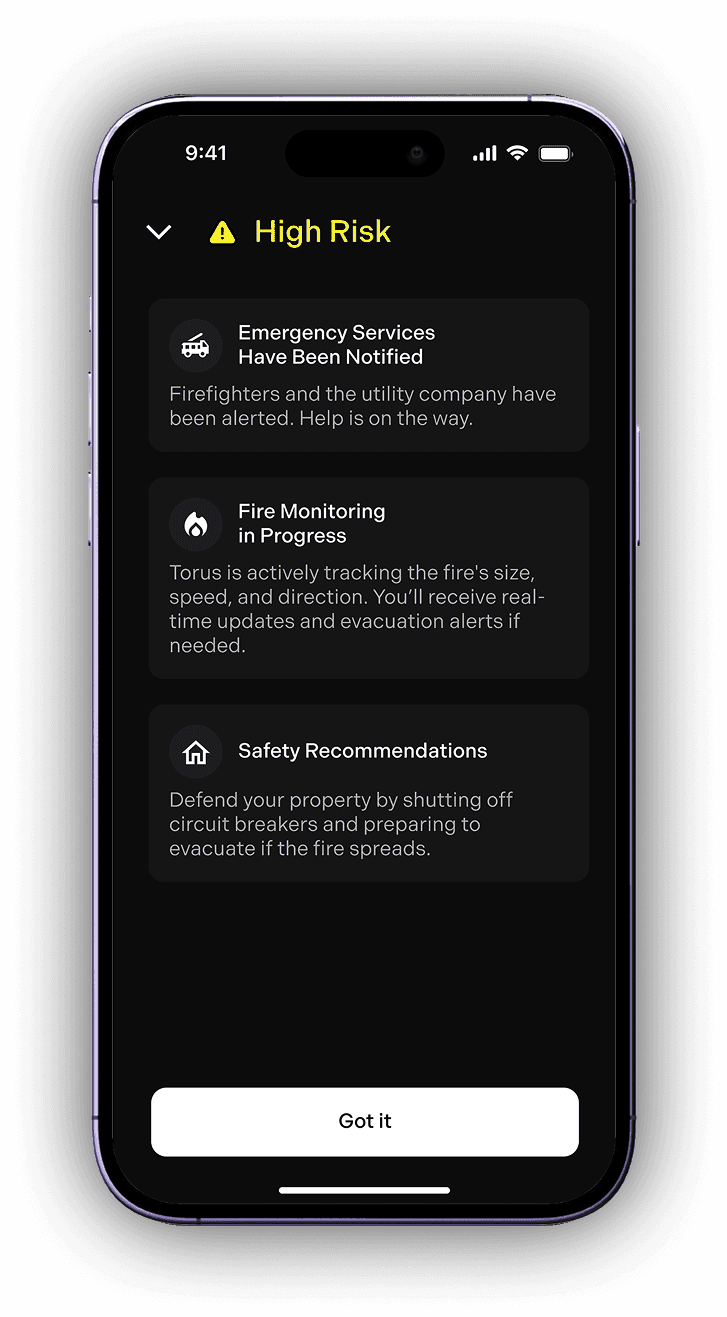
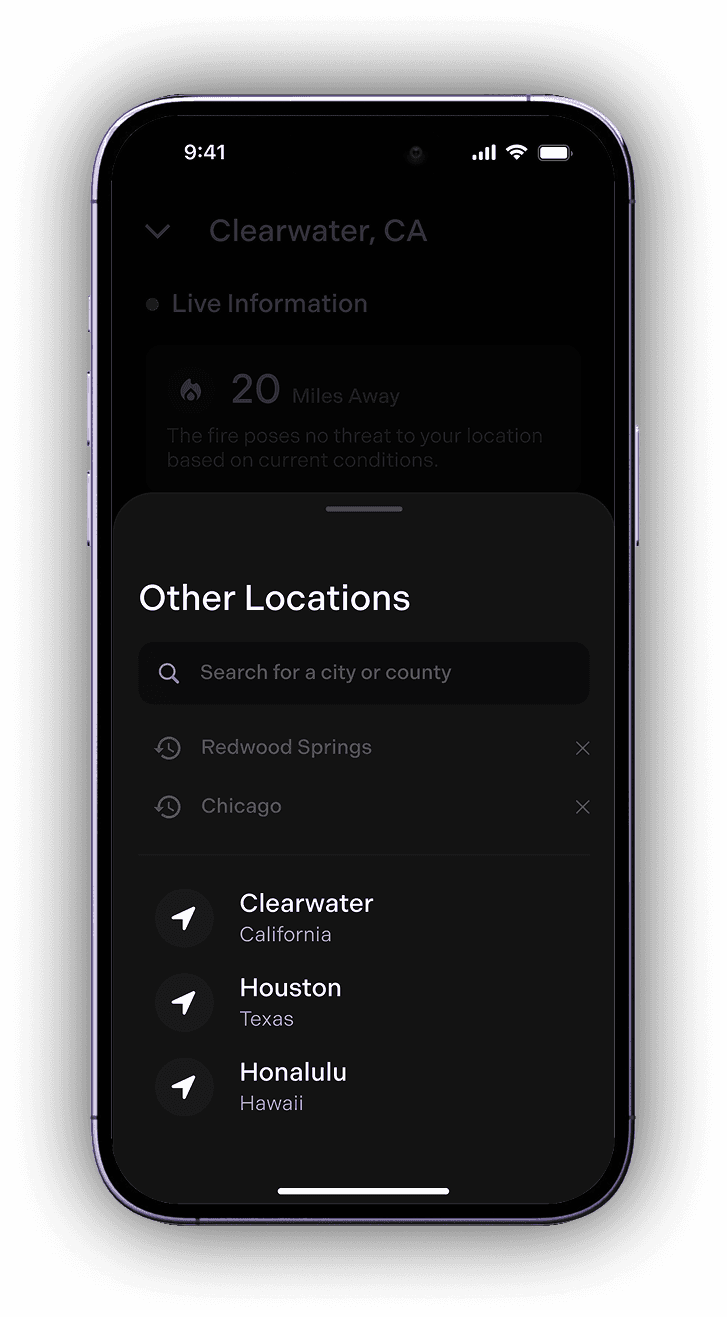
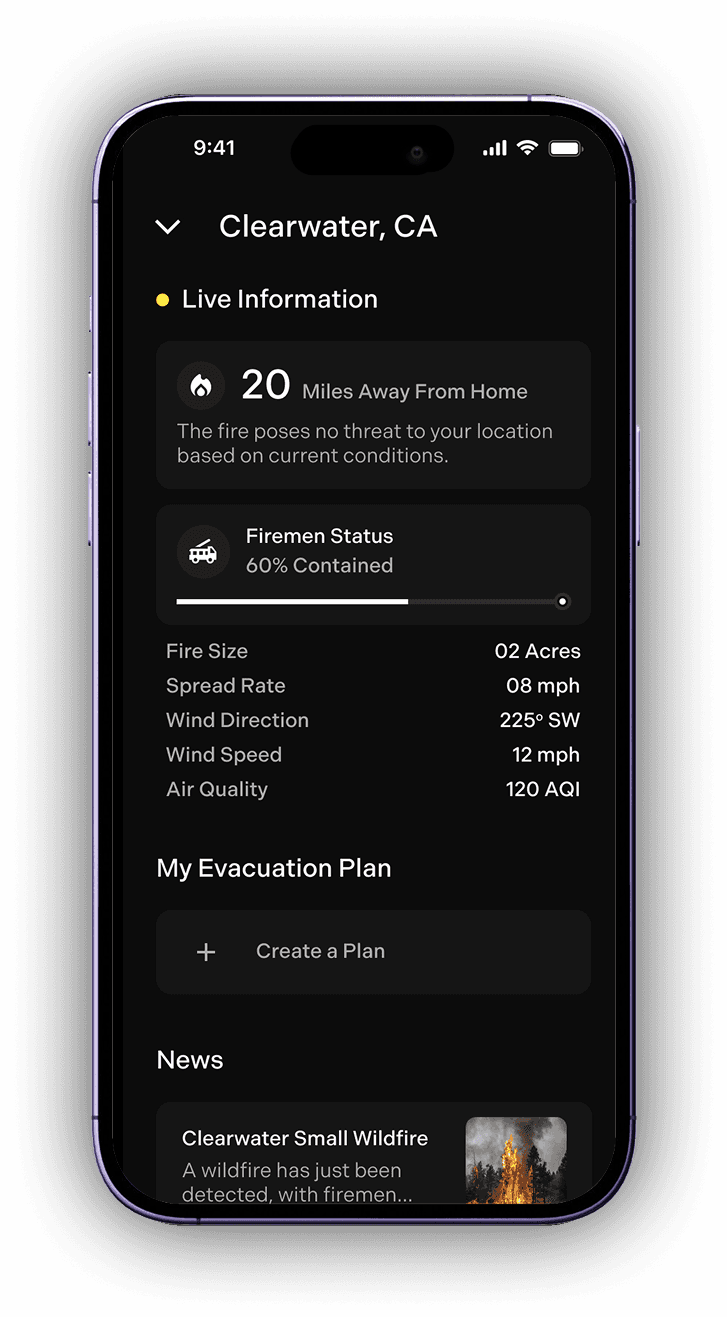
One key feature of the resident app include being able to create a customized evacuation plan in advance or in the event of an emergency, with Torus helping users plan a route that steers clear of the fire's predicted path.
My Reflections
Honing skills and working with groundbreaking tech
During this project, I truly honed my skills in physical design. I had the opportunity to practice maintaining a unified brand across not just an interface, but into a physical product design, packaging design, and additional paper materials.
Having no prior experience with packaging, it was a great challenge to balance completing that portion of the project alongside the UI workload we have become accustomed to. I enjoyed the non-traditional quarter structure, and I feel it left me a more flexible and well-rounded designer.
This was also my first experience designing a product that was based around technology that was still emerging. It was a new and interesting challenge looking into P2M AI and brainstorming how we could apply that to our project, when this technology's limits are still completely undefined.
Team Torus